Moscow’s Sochi Summit on Karabakh

Karabakh Armenian Soldier on the Frontline with Azerbaijan (nkrmil.am)

Karabakh Armenian Soldier on the Frontline with Azerbaijan (nkrmil.am)

In recent weeks, Armenia and its sister republic of Nagorny Karabakh have been experiencing an increase of violence along the contact line with Azerbaijan, claiming the lives of many soldiers on both sides. The fighting has been so intense that some observers have dubbed it the worst the region has seen since the 1994 ceasefire.

Ceasefire violations have been common since the 1994 armistice, with Azerbaijan often doing the violating as a means of warning the Armenians and the international community that it is not pleased with the status quo. Since the death of longtime Azerbaijani leader Heydar Aliyev and the succession of his son Ilham, the ceasefire violations have only increased in their intensity and aggressiveness. This reflects much of the character of the regime of Ilham Aliyev, who frequently engages in bellicose anti-Armenian rhetoric as a means of rallying the population around his notoriously corrupt government. He has often referred to the Armenians as a “worthless” nation and has continuously vowed to not only invade Karabakh but also advance on the Armenian capital Yerevan and to take the country’s turquoise Lake Sevan and the ruggedly mountainous Syunik region as well. Aliyev has also worked to use his country’s oil wealth as a means of not only enriching himself, his family, and his clique but also massively increasing Azerbaijan’s military spending. All this while brutally and swiftly stifling voices of dissent at home, earning Aliyev’s Azerbaijan an international reputation as an authoritarian petrostate – a corrupt kleptocratic khanate on the Caspian.

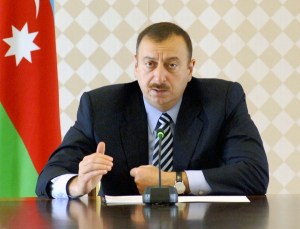
Azerbaijani President Ilham Aliyev

Azerbaijani President Ilham Aliyev

Aliyev’s strategy is a dangerous one. By intensifying ceasefire violations, engaging in aggressive rhetoric, and massively spending on the military, he believes that this will increase his authority and legitimacy domestically.  However, he is instead driving the region toward a war that neither the Armenian nor Azerbaijani sides need. In fact, despite its astronomical spending on high-tech military equipment, Azerbaijan is in a particularly bad place to start a war. Among other things, the Azerbaijani army is poorly-trained and rampantly corrupt. This is compounded by the fact that Aliyev does not want to have a military that is too strong because there has been a history of military coups in post-Soviet Azerbaijan. A war would also be devastating for Baku because the Armenians could easily target the Western-backed oil pipeline that runs through Azerbaijan. Further, it would be extremely difficult for Azerbaijani tanks to make it through Karabakh’s very mountainous terrain, which the local Armenians know intimately and would use as a “natural fortress” to fight against the Azeris. Finally, Armenia has very good security relations with the Russian military, which would protect Armenia in the case that a new conflict erupts.

Map of Armenia and the self-proclaimed Nagorny Karabakh Republic (NKR) in the Caucasus

Map of Armenia and the self-proclaimed Nagorny Karabakh Republic (NKR) in the Caucasus

Nevertheless, Azerbaijan has persisted in violating the ceasefire along the line of contact and not just in the vicinity of Karabakh. In recent years, there have been several ceasefire violations along the border with Armenia’s northern province of Tavush, close to the border with Georgia. Then in June, Azerbaijan launched an unexpected attack on Armenia from its exclave of Nakhichevan. The exclave has a naturally-defined border with Armenia running along the Vayots Dzor and Syunik (or Zangezur) mountain ranges. The situation has remained largely calm along this border due to the fact that Armenia controls the heights looking over Nakhichevan.

Protection mounds placed near the Armenian-Nakhichevan border, July 2014

Defensive mounds placed near Armenia’s north-south highway along the Armenian-Nakhichevan border, July 2014. (Photograph by this writer)

However, one section of Armenia’s border with Nakhichevan, between the Armenian Ararat province and the northern Nakhichevan district of Sadarak, remains less secure and it was there where the recent border attack unexpectedly occurred. While traveling along Armenia’s north-south highway in Ararat province this July, I witnessed large mounds along the roadside of this section of the border that had been setup by the Armenian military. They are intended to protect civilian drivers from Azerbaijani artillery and indeed, the attacks on Armenian positions are so close that they have actually reached this highway.

In yet another recent episode in early July, three men from Azerbaijan (allegedly Azerbaijani commandos) infiltrated the Karabakh contact line and entered into the region of Karvatchar (or Kelbajar) where they killed two people and seriously injured another. One was shot dead while the other two are on trial for murder in Nagorny Karabakh. All of this has only increased fears in Armenia about the start of a potential new conflict in the region, which very few in Armenia desire. It has also made efforts for peace and dialogue between the sides even more difficult.

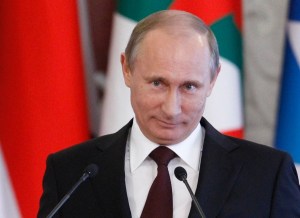
Russian President Vladimir Putin (Reuters / Maxim Shemetov)

Russian President Vladimir Putin (Reuters / Maxim Shemetov)

Despite this, Armenia’s Sargsyan and Azerbaijan’s Aliyev have been invited to Sochi at the behest of Russian President Vladimir Putin. The meeting was already planned in advance. Moscow wants to strengthen its position in the Caucasus, especially regarding the Eurasian Union. As efforts to lure Georgia back into Moscow’s fold have stalled, the Kremlin is instead looking to the possible prospect of bringing the sides together and luring Azerbaijan into its Eurasian Union. However, despite some recent warm-up in the relations between Baku and Moscow, Aliyev appears largely content with remaining independent of any geopolitical union, whether it be the Eurasian Union or the EU.

In this context and in the context of the more recent ceasefire violations, Moscow is now shifting gears and trying to play the role of a peacemaker. It realizes that an immediate peace deal over Karabakh is unattainable and is instead working to simply calm tensions and prevent another war from breaking out. As noted above, if a new conflict erupted in Karabakh, Moscow would be obliged by treaty to assist Armenia in ensuring its security. However, given the conflict in Ukraine’s Donbas, a war in the Caucasus is the last thing that Moscow needs. Therefore, Putin’s primary objective at the Sochi summit is to de-escalate tensions between the sides, as Moscow was successfully able to do during the 2014 Sochi Olympics.

Overall, one thing is most certain: nobody in the region would benefit from a new war over Karabakh.

Russia and Georgia: Where to Go Next?

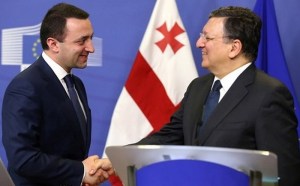
Georgian Prime Minister Irakli Garibashvili (left) and EU's José Barroso (right)

Georgian Prime Minister Irakli Garibashvili (left) and EU’s José Barroso (right) (Georgian Government)

On Friday, Georgia signed its Association Agreement with the EU. The event was favorably celebrated in Tbilisi and touted in the West as a “first step toward the EU.”

However, the agreement does not guarantee automatic membership in the EU. In this regard, Georgia still has a long way to go. Russia has voiced its concerns regarding the EU agreement. Abkhazia, one of Georgia’s breakaway republics on the Black Sea, has echoed this sentiment. On July 1, its Foreign Ministry declared the following:

It is quite obvious that signing of the Association Agreement with the EU does not provide to Georgia an immediate perspective for membership in this union, but at the same time, it distances Georgia from cooperation with neighboring states, first of all, with the Russian Federation and Republic of Abkhazia.

There has also been concern in the West, and to a lesser degree in Georgia, regarding an even greater Russian reaction. Some fear a reversal of the progress made on economic ties while still others fear an invasion of Georgia proper.

Yet Moscow will likely not resort to hard retaliatory measures as has been widely speculated in the West. In its effort to bring all the ex-Soviet states into its Eurasian Union, instead Moscow has sought to pursue its aims by proposing offers and deals that may make the ex-Soviet republics more amiable to it.

Georgia is an important country to include in a proposed supranational union of ex-Soviet states, not just for Putin, but for any future Russian leader for several reasons.  Georgia has historically been viewed in Moscow as the “center” of the Caucasus region and the gateway to Eurasia. Outside of Abkhazia, it possesses a prosperous Black Sea coast that includes port cities and resorts like Poti and Batumi. Russia views the Black Sea as a vital geostrategic region and as part of its traditional zone of influence. Georgia naturally plays a role in this. The United States, Russia’s rival in the region, has also realized the geopolitical significance of Georgia and thus has focused much of its efforts on trying to bring Georgia into Euro-Atlantic structures. Whether or not such ambitions will help US-Russian relations, global security, or Georgia’s own efforts toward reform, remains an open question.

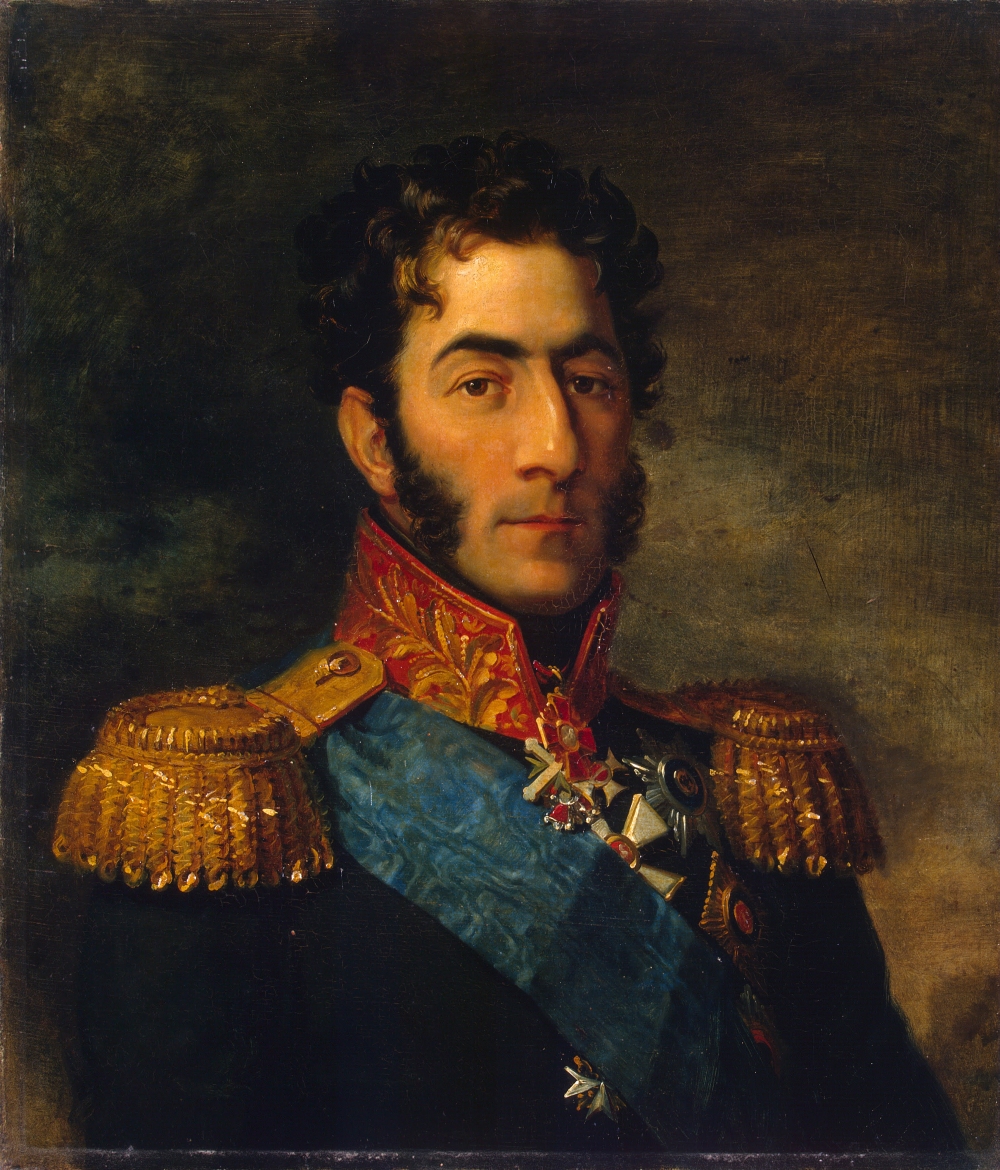
Prince Pyotr Bagration, George Dawe (1820)

Prince Pyotr Bagration, George Dawe (1820)

Further, there are also cultural and interpersonal affinities between Russia and Georgia. A Georgian nationalist might state that “as people, Russians and Georgians were never brothers and sisters” and that this is “Soviet mythology.” However, the truth and reality are far different from such ethnonationalist pronouncements. Despite the rupture in relations from the 2008 war, most Russians admire the Georgians, if only because of their reputation as easy-going party people. Conversely, many Georgians deeply admire Russian culture, literature, and language. At least 92% of Georgians still speak Russian as a second language. There are also the shared ties of Orthodox Christianity. Additionally, as many as one million ethnic Georgians live and work in Russia, and that number is estimated by some to be even higher. Georgians are generally well-integrated in Russian life and freely intermarry with Slavic Russians. The most famous Georgian in Russian history is probably Prince Bagration, the hero of the Napoleonic War. The most infamous is probably Joseph Stalin.

These are the reasons why Russia values Georgia and why its long-term plan is to lure Tbilisi back through some goodwill gesture. The obvious place for this to occur would be in Georgia’s two breakaway regions: Abkhazia and South Ossetia. Both were recognized by Russia as independent states after the 2008 war, thus further complicating Georgian-Russian relations. However, Moscow’s aim at the time was to “respond” to the West’s recognition of Kosovo and to domestically discredit Georgia’s controversial President, Mikheil Saakashvili.

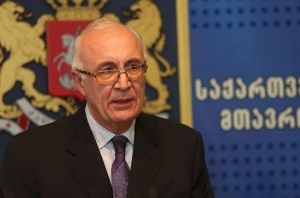
Georgia's Moscow attaché Zurab Abashidze (Georgian Government)

Georgia’s Moscow attaché Zurab Abashidze (Georgian Government)

With these goals attained and with a new government in Georgia willing to talk to Moscow, Russia may be more flexible on the issue. Already Bidzina Ivanishvili has stated that the goal of reunification with the two breakaways is Georgia’s top priority and the Georgian attaché to Moscow, Zurab Abashidze, has confirmed this position, even tying it to the re-establishment of relations between Georgia and Russia. At the same time, Russia will not betray the interests or rights of the Abkhaz or Ossetes. Instead, the logical solution lies in working to find a compromise between them and Tbilisi to forge some sort of federal or confederal solution. This can be accomplished informally without direct diplomatic relations, even outside of the Geneva framework which, like its OSCE counterpart on Nagorny Karabakh, has failed to produce any serious results or resolutions.

It is likewise unclear how the recent revolution in Abkhazia will affect such talks. Regardless of speculation on whether or not Russia played a role in the revolution, or whether it was an entirely domestic Abkhaz affair, it is clear that whomever the Abkhaz select as their next president, he or she will play a decisive role in working to normalize relations between Abkhazia and Georgia. Certainly, even this depends on the development of Georgian-Russian relations.

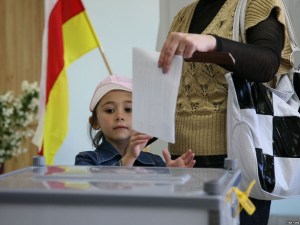
Woman casts ballot in the South Ossetian parliamentary election as her daughter watches (ITAR-TASS)

Woman casts ballot in the South Ossetian parliamentary election as her daughter watches (ITAR-TASS)

Meanwhile, the situation in South Ossetia is less clear. United Ossetia, the victors of the recent parliament vote in the breakaway region, advocate joining North Ossetia in a political union with Russia. It is unclear if they will follow through with such a program or, if under pressure from Moscow, they will take a more compromising stand on relations with Georgia. Moscow has already distanced itself from Ossetian demands and will likely react with caution if South Ossetians do indeed vote for a political union with Russia (as Moscow did with the Donbas rebels in Ukraine). In general though, the outcome of all of this remains to be seen.

The Georgians are also looking for an opening with Moscow not just in terms of a resolution to its conflicts. Tbilisi also wants to ensure that if Moscow makes an attractive counteroffer to the EU, it must consider Georgian national sensitivities. Any effort toward integration among post-Soviet states cannot be imperial in nature, but rather a union of equal states. If the Eurasian Union, like the EU, were to ensure an official status for Georgian and other national languages, then such an idea would become much more attractive to Tbilisi and would make the Eurasian Union an easier sell to the Georgian public at large. Moscow must keep in mind its own long tradition of multiculturalism, universalism, and ethnic tolerance that has preceded the birth of post-war “EU values” by several centuries. In order to be a viable international player, Russia must do more to embrace this great tradition of multiculturalism and shun all forms of ethnic Russian nationalism that not only threaten the unity of Russia but also its geopolitical interests in the ex-Soviet space as well. In this regard, presenting the Eurasian Union as a “union of equals” to Georgia would certainly work to its advantage.

Bidzina Ivanishvili (RIA Novosti / Aleksandr Imedashvili)

Bidzina Ivanishvili (RIA Novosti / Aleksandr Imedashvili)

Efforts toward a reconciliation with Moscow by Tbilisi began almost immediately after the victory of Bidzina Ivanishvili and the Georgian Dream coalition in 2012. However, the progress of such a reconciliation had to be limited to basic issues, such as trade and visa questions. This was due not only to the complex situation that existed over Georgia’s breakaways, but also because of the fact that Saakashvili still remained the President into 2013 and thus still held significant political influence. Following the electoral victory of Margvelashvili in 2013 and Ivanishvili’s appointment of Garibashvili as the new Prime Minister, the chances for an enhanced reconciliation grew significantly. During the Sochi Olympics, Putin proposed meeting with the Georgian President. Abashidze, and his Russian counterpart Grigory Karasin, agreed to meet and plan this high-level visit which was supposed to take place in March. However, as the Ukraine crisis worsened and the crisis in Crimea erupted, the proposed meeting was postponed indefinitely.

Both Moscow and Tbilisi likely have their reasons for this. Moscow is not only focused primarily on the outcome of Ukraine but it is also clear that, since Yanukovych’s ouster, it learned from recent history and sought to not place the potentially friendly government in Tbilisi in the same position as Yanukovych. Already Mikheil Saakashvili has threatened to launch his own “Georgian Maidan,” and a Georgian volte-face on the EU Association Agreement would have been the perfect excuse to launch such a revolt. Tbilisi likely shares this same concern and that probably played a part in its considerations on how to approach Moscow. Adding to this were other considerations on the Georgian side, such as its desire to balance its relations between East and West. The government also sought to maximize its support base in the recent local government elections.

The Georgian government also has a problem in that its party, the Georgian Dream coalition, is still a coalition. Garibashvili and Margvelashvili, though they have disagreed on petty issues such as who will sign the Association Agreement, are nevertheless allied on the question of Russia. They favor a pragmatic and balanced approach. This is contrasted by Davit Usupashvili who heads the Georgian parliament, a very vocal critic of Moscow and a stalwart supporter of NATO expansion. Defense Minister Irakli Alasania has been traditionally more moderate and once played a key role in bringing the Abkhaz and Georgians close to a peace. However, during his stint as Defense Minister, his advocacy for NATO membership and his proposal to place missile bases on Georgia soil near Abkhazia have raised eyebrows in Moscow, Tbilisi, Sukhumi, and Tshkinvali.

Tbilisi was likewise concerned over the Russian annexation of Crimea and of the potential implications of this for Georgia’s breakaways, though Russia quickly assured Tbilisi afterward that Crimea was a unique case and that Russia was not interested in annexing Abkhazia or South Ossetia. The Georgian Prime Minister Garibashvili reaffirmed this view on an interview with the BBC.

What the next step will be in Tbilisi’s relations with Moscow remains to be seen. However, there are compromises and deals to be made. One aspect of Tbilisi’s protracted conflicts with Moscow, Sukhumi, and Tskhinvali remains clear: that from a basic geographic perspective, cooperation between Russia, Georgia, Abkhazia, and South Ossetia, is not only desirable and logical, but necessary.

Some Georgians may want to break away totally from Russia and join Europe, but they seem to forget the simple fact of geography; that the Kura is not the Seine and that Georgia is not at the center of Europe but at its very fringe. Historically, it has had less-than-pleasant relations with its larger Islamic neighbors like Turkey and Iran. It shares a very long northern border with Russia, a country that has served for centuries as Tbilisi’s protector and as its lifeline to the rest of Europe. Georgian nationalists can try to wish Russia away all they want, but the fact is that Russia is there and Tbilisi has to deal with it and can even benefit from it.

For its part, Russia views Tbilisi as an important factor in its security policy, and in turn needs Georgia to secure its position in the Caucasus region, especially in the unstable North Caucasus. Thus, while ethnic Russian nationalists may believe that weakening or punishing Georgia for its “independent attitude” will help Russia, in fact they are far from correct. This will only exacerbate regional divisions and animosities that will most certainly not serve the interests of Russian security.

Finally, the Abkhaz and Ossetian nationalists too may try to wish Georgia away, but this is unrealistic as well. Geography and centuries of close cultural ties demand coexistence and compromise. Thus, it is to everybody’s benefit and advantage that there be a solution to the protracted conflicts plaguing the Georgians, Russians, Abkhaz, and Ossetes. Above all, it is the people of Georgia, Abkhazia, South Ossetia, and Russia who will benefit the most from a peaceful diplomatic solution. This is what the politicians of these countries and regions have to realize if any tangible progress is to be accomplished.

Abkhazia’s Revolution: Background and Analysis

UN Map of Abkhazia, 2014

UN Map of Abkhazia, 2014

As the attention of the world was fixed on the violence, unrest, and uncertainty in Ukraine, a revolution erupted in another former Soviet territory. This was the self-proclaimed republic of Abkhazia, a subtropical breakaway territory of post-Soviet Georgia located along the Black Sea coast. However, in order to fully understand what is happening in Abkhazia now, a brief background of the region is required.

What is Abkhazia?

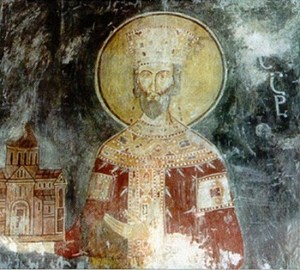
Mural of Bagrat II of Abkhazia from the Gelati Monastery in Imereti, Georgia

Mural of Bagrat II of Abkhazia from the Gelati Monastery in Imereti, Georgia

An autonomous republic of Georgia in Soviet times, Abkhazia is the home of the Abkhaz, a people who speak a Northwestern Caucasian language that is unrelated to Georgian but more closely related to the language of the Adyghe people, better known to the English-speaking world as Circassians. At the same time, the Abkhaz have a long historical relationship with the Georgians. Though linguistically distinct, Abkhazia was part of the old West Georgian Kingdoms of Colchis and Lazica. Further, the celebrated King Bagrat II of Abkhazia (himself of mixed Abkhaz and Georgian ancestry) unified Georgia as a single, feudal state in the Middle Ages. Consequently, as a people, the Abkhaz have a mixed cultural heritage, incorporating Circassian and Georgian influences as well as Russian, Byzantine, and Turkish ones – and also elements that are uniquely “Abkhaz.” Like the Georgians, the Abkhaz are renowned for their polyphonic singing. In terms of religion, most Abkhaz are Orthodox Christians with significant Muslim and pagan minorities (though pagan traditions generally persist among all Abkhaz).

The Abkhaz-Georgian relationship is complex. In the 19th century, several Abkhaz perceived to be sympathetic to the Ottoman Sultan were deported, along with almost all of their Adyghe neighbors, to the Ottoman Empire by Imperial Russia. Though many Abkhaz remained in Abkhazia, members of other ethnicities moved into their territory as well. These included Russians, Germans, Baltic peoples, Armenians, and Greeks. They also included Mingrelians, a subgroup of Georgians. Many of these Mingrelians were peasants who sought to find free land that was unavailable in their own historic region of Mingrelia.

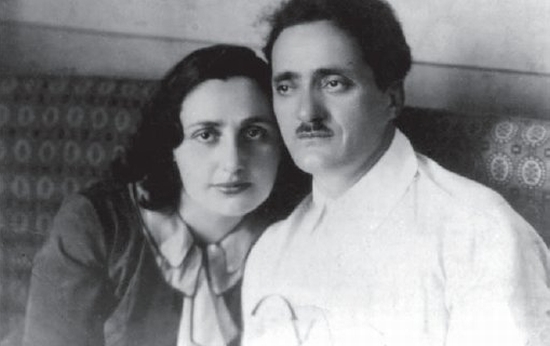
Nestor Lakoba and his wife Sariya.  Both were victims of Stalin and Beria's Terror in the 1930s.

Nestor Lakoba and his wife Sariya. Both were victims of Stalin and Beria’s Terror in the 1930s.

By the early 20th century, Abkhazia was a distinctly heterogeneous region. Abkhaz comprised roughly the same proportion or a slightly higher proportion of the population to Georgians, with other ethnicities forming the remainder of the population. During Sovietization, Abkhazia was made a contractual, co-equal republic affiliated with Soviet Georgia. However, the territory’s status changed when it was downgraded in the 1930s from being a co-equal region within Georgia, to an autonomous republic of Georgia. Nevertheless, its leader Nestor Lakoba enjoyed popular support from the local population. Abkhaz and Georgians within the republic generally got along well with one another. In fact, Lakoba’s own wife Sariya was a beautiful ethnic Georgian woman from Batumi.

However, Lavrentiy Beria, the leader of Soviet Georgia and of Soviet Transcaucasia despised Lakoba. Born to a Mingrelian family in Abkhazia, Beria viewed Lakoba as a rival for influence with Stalin especially because Stalin seemed to favor Lakoba. The rivalry is perhaps best illustrated in the glasnost-era film Belshazzar’s Feasts, or A Night with Stalin based on a story from the novel Sandro of Chegem by the celebrated Russian-language Abkhaz writer Fazil Iskander. The enmity did not end well for Lakoba or Abkhazia. He was assassinated by Beria in 1936. Shortly afterward, he was declared an “enemy of the people” and his family was persecuted. Beria then flooded Abkhazia with large numbers of ethnic Mingrelian settlers and encouraged the invention of a false academic discourse claiming that the Abkhaz were not indigenous to Abkhazia, but “new arrivals.” By the 1950s, the Abkhaz were reduced to only 15% of the population in their own homeland.

Beautiful Gagra on the Black Sea Coast (Panoramio)

Beautiful Gagra on the Black Sea Coast (Panoramio)

After Stalin’s death, the Abkhaz began to experience an era of limited freedom. Abkhaz-language publishing returned and the Abkhaz representation in Abkhazia increased. Gradually, the Abkhaz portion of the population was beginning to bounce back as well. The situation in the republic remained largely peaceful. Abkhazia was known throughout the Soviet Union as a popular and prosperous holiday destination. Gagra, Sukhumi, Pitsunda, and other coastal cities became highlights of the Soviet Black Sea Riviera. Its citrus trees, spas, and the famous Sukhumi botanical garden became legendary throughout the Soviet Union. Politics meant little to vacationers on Abkhazia’s inviting Black Sea coast. The republic’s diverse ethnic groups generally lived in peace with one another.

However, ethnic tension arose with the start of glasnost. Some Abkhaz nationalists demanded to elevate their territory to the status of a full union republic while Georgian nationalist dissidents, led by the eccentric Zviad Gamsakhurdia (also a Mingrelian) began to encourage a chauvinistic discourse of a “Georgia for the Georgians.” They claimed that Abkhaz, Ossetians, and others were “new arrivals” in Georgia and consequently alienated them. Clashes erupted between Abkhaz and Georgians in Sukhumi in 1989. Yet despite the violence and the rival nationalisms, Gamsakhurdia reached a compromise with the Abkhaz in a power-sharing agreement. Thus, as ethnic tension engulfed South Ossetia and civil war in Georgia proper erupted over Gamsakhurdia’s nationalist discourse and authoritarian rule, Abkhazia remained relatively peaceful. Notably, the Abkhaz leadership expressed the desire for their republic to become a full co-equal republic within a federated Georgia, an offer that was rejected by Tbilisi.

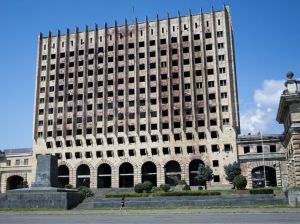
The Council of Ministers Building of Abkhazia, still damaged from the 1992-93 Abkhaz-Georgian war (RFE/RL)

The Council of Ministers Building of Abkhazia, still damaged from the 1992-93 Abkhaz-Georgian war (RFE/RL)

In December 1991, the rouge general Tengiz Kitovani led a coup against Gamsakhurdia that deposed the controversial nationalist president. After Gamsakhurdia was ousted from power, the more moderate Soviet-era Georgian leader and former Soviet Foreign Minister Eduard Shevardnadze was invited to return to Tbilisi as Georgia’s new President. Undeterred, Gamsakhurdia fled to his home region of Mingrelia where the “Zviadists” launched a revolt against the new government in Tbilisi. Acting on his own accord, Kitovani invaded Mingrelia and then pressed on to Abkhazia, claiming that Gamsakhurdia’s supporters were sabotaging the Abkhazian railway. In reality, Kitovani was moving to bring the Abkhaz firmly under Tbilisi’s rule.  His operation resulted in a full-fledged and violent war in Abkhazia with atrocities committed by all sides. The Abkhaz side was assisted by rouge Russian nationalists (though not the Russian government) and by militants from the North Caucasus like the notorious Shamil Basayev. By the end of the war, much of Abkhazia’s Georgian population either fled or was expelled. Many still live as IDPs in Georgia today, though a sizable number have returned, notably to the southern Gali district.

Post-war Abkhazia and lost alternatives toward peace

Abkhazia's Sergey Shamba (RFE/RL)

Abkhazia’s Sergey Shamba (RFE/RL)

Peace talks subsequently ensued, often with Yeltsin’s Russia leading the way in the negotiations. Several proposals existed in the 1990s to create a common Georgian-Abkhaz federal or confederal state structure. The Abkhaz side claims that they accepted such proposals, but that they were rejected by Shevardnadze who wanted to retain a unitary Georgian state with an autonomous Abkhazia. The Abkhaz refused this and talks ultimately fell through. However, a renewed effort toward peace began after the 2003 Rose Revolution in Georgia. Mikheil Saakashvili’s new envoy to the disputed territories was Irakli Alasania (now Defense Minister of Georgia).  Born to a Mingrelian family, Alasania was able to forge very good working relations and friendship with the Abkhaz.  He invited the Abkhaz Foreign Minister Sergey Shamba to Tbilisi, a request with which Shamba accepted with pleasure. The visit was by all accounts a success, except for the fact that President Saakashvili refused to meet with Shamba. Instead, confident that he had the full backing of the United States and NATO, Saakashvili planned (according to many Georgian observers) to retake Abkhazia and Georgia’s other breakaway region, South Ossetia, by force. On the day of Shamba’s Tbilisi visit, Saakashvili was on the Georgian-Abkhaz frontier making military preparations.

Yet Alasania was undeterred. With Shamba he agreed to sign a non-use-of-force agreement as a confidence-building measure with the Abkhaz. This would have taken place in Sochi under the auspices of then-Russian President Dmitri Medvedev. It would have been a serious alternative leading to a de-escalation in tensions not only between Tbilisi and Sukhumi, but also Tbilisi and Moscow as well. However, Saakashvili refused to permit the meeting to take place. Instead, according to Nino Burjanadze and others, Saakashvili continued preparations for war on the two territories, and brazenly informed Russia’s Vladimir Putin about it. Putin warned Saakashvili that invading either of the two territories would result in a Russian intervention and a formal recognition of their independence. But Saakashvili dismissed this. The result was the August 2008 war in which Saakashvili’s Georgia lost. Both Abkhazia and South Ossetia were recognized by Russia.  Any sort of peace or reconciliation now seemed more distant than ever.

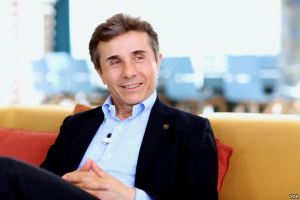
Georgian Billionaire Bidzina Ivanishvili (VOA)

Georgian Billionaire Bidzina Ivanishvili (VOA)

A renewed chance for peace?

In October 2012, Mikheil Saakashvili’s party, the United National Movement lost parliamentary elections to the Georgian Dream coalition, led by the Imeretian billionaire Bidzina Ivanishvili. Unlike Saakashvili and his party who were unequivocally pro-Western, Ivanishvili and his party can be best described as neither pro-Western, nor pro-Russian, but pro-Georgian. While Ivanishvili has spoken of the historical importance of joining the EU, he has, at the same time, not completely ruled out joining the Moscow-backed Eurasian Union either. The party’s control on power increased following Saakashvili’s loss of the Georgian presidency to the bon-vivant philosopher-turned-politician Giorgi Margvelashvili. Then, Ivanishvili himself stepped down as Prime Minister, appointing Irakli Garibashvili as his successor.

One of the cornerstones of the new Georgian government’s foreign policy is reunification with Abkhazia and South Ossetia, even more so perhaps than membership in the EU and NATO. Evidence of this is the fact that the Ivanishvili government is filled with people who have good working relations with the Abkhaz and Ossetians who understand fundamentally the ethnic concerns of both groups. These include individuals like Alasania, Guram Odisharia, and Paata Zakareishvili. Many were featured in the documentary, Absence of Will, a must-see film for anyone wanting to get a true understanding of the Abkhaz-Georgian conflict. Indeed, the present Georgian Dream government can truly be described as the first post-Soviet Georgian government that really understands Abkhazia and South Ossetia.

Ivanishvili has kept both the EU and NATO on the table, likely as bargaining chips with Moscow to regain the two breakaway regions. However, the sentiments of the Abkhaz and the Ossetes have to be taken into consideration as well, and Russia will not simply “reverse” its recognition of these two regions. Rather, it may work to promote a “reunification” of these regions with Georgia proper into a co-equal federation or confederation (though Tbilisi would be more accepting of the former than the latter). This would be a logical resolution to the issue and it would certainly help Moscow both geopolitically and domestically with the Georgian public (the Georgian Dream would receive the credit for reunifying the country, not Saakashvili). I have written about such a resolution in the past and others, including Dmitri Trenin of the Moscow Carnegie Center, have done so as well.

What is happening in Abkhazia now?

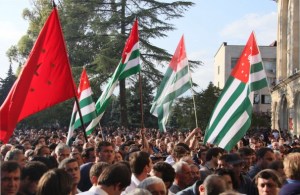
Protests in Sukhumi (AFP / Getty Images / Ibragim Chkaduaibragim Chkadua)

Protests in Sukhumi (AFP / Getty Images / Ibragim Chkaduaibragim Chkadua)

Since last Tuesday, there have been massive protests in Sukhumi against the Abkhaz President Aleksandr Ankvab. The opposition has accused the leader of authoritarian tendencies and of misspending funds by Russia. On Saturday, the Abkhaz parliament relieved Ankvab of his presidential duties. He resigned the next day. Snap elections have been called for August 24.

What is happening now in Abkhazia is either:

A) Genuine discontent and frustration with the Ankvab government by the people of Abkhazia and by the political opposition, or,

B) Moscow covertly working through the opposition in Abkhazia to unseat Ankvab and to bring to power a government more compliant to Moscow that would be more willing to compromise with Georgia. This is possible given the sheer timing and speed with which the events have been proceeding (kind of like Crimea) since last Tuesday.

Both are reasonable explanations for the present situation.

However, it must also be noted that the Abkhaz opposition is a diverse group. One of its leaders Raul Khajimba is a hardline nationalist and former KGB agent who has categorically ruled out any compromise with Georgia, let alone granting ethnic Georgians in Abkhazia Abkhaz citizenship. Another, Sergei Shamba is the man who both led the peace negotiations with Abkhazia in the 1990s and forged a good working relationship with Georgia’s Irakli Alasania. If anyone in Abkhazia can find a compromise solution to the problem, it would be Shamba.

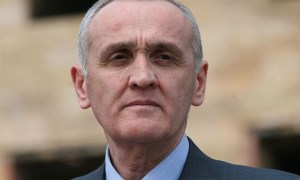
Former Abkhaz President Aleksandr Ankvab (RIA Novosti / Vladimir Popov)

Former Abkhaz President Aleksandr Ankvab (RIA Novosti / Vladimir Popov)

The most interesting development is the sudden request by the Abkhaz opposition to join Moscow’s Eurasian Union. Prior to this, the idea of joining the Eurasian Union never figured in Abkhaz politics much at all. The rapidity of such a request, and the fact that it has appeared almost coincidentally with the signing of the Eurasian Union deal between Moscow, Astana, and Minsk, also makes one wonder whether or not Moscow is involved. This may be intended to further illustrate to Tbilisi that it risks being permanently separated from Abkhazia if it joins the EU and NATO. On the other hand, if this request emerged from the genuine sentiments of the Abkhaz opposition, it could be in response to the Georgian Defense Minister Alasania’s statements calling for NATO bases in Georgia, which Abkhaz politicians of all political strands oppose. Such statements may have been made by the traditionally more moderate Alasania to call Moscow’s bluff. Likewise the request to join the Eurasian Union could also be a combination of both factors (i.e., Moscow’s involvement and concerns of the Abkhaz regarding Georgian NATO membership).

In the meantime, it will be interesting to see how Moscow responds to the demand of the Abkhaz opposition to join the Eurasian Union. Will they welcome them with open arms, or will they shuffle their feet? My guess is the latter, not only because Moscow still wants to have a card on the table to lure back Tbilisi, but also because the other two founding members of the Eurasian club, Belarus and Kazakhstan, do not recognize Abkhazia’s independence. Minsk and Astana would need to recognize Abkhazia’s independence before supporting Sukhumi’s membership in the Eurasian Union, which they will likely not do because they have their own geopolitical priorities (especially Nazarbayev with his traditionally balanced foreign policy). All of this adds credence to the scenario that Moscow is involved in the present revolution in Abkhazia because, under the present geopolitical circumstances, Abkhazia can never fully join the Eurasian Union without Georgia largely due to the position of Minsk and Astana. Hence, the ouster of Ankvab may very well be step one to a detente between Tbilisi, Sukhumi, and Moscow.

It should likewise be noted that Moscow does not need to do this in South Ossetia because it already has a government in Tskhinvali that is now more or less under its control. To illustrate this, it should be recalled that the former interim South Ossetian President Vadim Brovtsev was an ethnic Russian businessman from Chelyabinsk with no prior ties to the region.

In any case, one can safely say that unless Moscow, Tbilisi, and Sukhumi resolve their differences, Abkhazia could become another “frontline” in the emerging new Cold War. If this happens, it would make the situation in the Caucasus region much more dangerous and it would ultimately be a negative development for Russian, American, European, Middle Eastern, and international security.

Darial: An Opportunity for Georgian-Russian Cooperation?

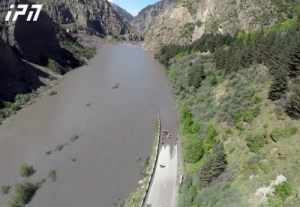
Photograph of the Darial Gorge Disaster (Interpress News Agency)

Photograph of the Darial Gorge Disaster (Interpress News Agency)

Located along the Georgian Military Road, south of Vladikavkaz and just north of Mount Kazbek, one finds the famous Darial Gorge. Once celebrated in Lermontov’s romantic poem, The Demon, the Darial was the site of a terrible disaster on Saturday.

A major landslide originating from the Devdoraki glacier on the northern slopes of Kazbek, brought down a massive wave of debris and mud into the gorge. One Ukrainian citizen, a truck driver, was killed. Seven others are reported missing. Three trucks are reportedly buried in the debris. The landslide blocked the Terek river bed and destroyed part of the Georgian Military Road linking Georgia to Russia, the only overland link between the two countries given the unresolved Georgian-Abkhaz conflict.

The disaster also halted the flow of natural gas from Russia to Georgia’s southern neighbor, Armenia, which heavily relies on this resource. Armenians also rely on the Georgian Military Road as a point of direct land access from Georgia to Russia, where many Armenians are migrant workers. The only other possible outlet would be from the Georgian port cities of Batumi or Poti on the Black Sea to Sochi in Russia via boat. These links are especially vital for Armenia, a country still blockaded by Turkey and Azerbaijan over the Nagorny Karabakh dispute. Consequently, for Armenians, Georgia is more than just a neighboring country. It is a lifeline.

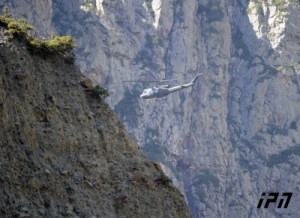
Rescue crews were immediately mobilized at the scene of the disaster. 150 people were rescued, primarily “customs, border guard and police employees, as well as several foreign citizens, who are cargo truck drivers.” All were evacuated by helicopter. Twelve workers (all Turkish citizens), trapped in the derivation tunnel of the nearby Darial hydro power plant, were also rescued. The power plant, which is under construction, is highly controversial in Georgia. Georgian environmental activists say that building the dam could adversely affect the area’s ecology.

Georgian President Margvelashvili in the Darial Gorge (Interpress News Agency)

Georgian President Margvelashvili in the Darial Gorge (Interpress News Agency)

Prime Minister Irakli Garibashvili and several of his ministers, including Georgian football superstar-turned-energy-minister Kakha Kaladze, arrived in the area to hold a meeting on the emergency.  Garibashvili left his helicopter to the rescuers and returned to Tbilisi instead by car.  President Giorgi Margvelashvili also went to the Darial to survey the damage. When he arrived from Tbilisi, he concluded that the mountain collapse was larger than the 2007 landslide in Georgia.

Significantly, the first foreign aid came from Russia.  Immediately following the disaster, contact was established with Russia’s Ministry of Emergency Situations.  The Russian Foreign Ministry has pledged to mobilize aid to assist Georgia in its recovery efforts.  To this end, it has given Georgia 18 metric tons of diesel fuel to “secure uninterrupted work of heavy equipment” to clean up the area affected by the landslide.  Prime Minister Irakli Garibashvili has thanked Moscow for its assistance.  On the morning of May 19, official Armenia has offered aid to Tbilisi as well.

Rescue Helicopter in the Darial (Interpress News Agency)

Rescue Helicopter in the Darial Gorge (Interpress News Agency)

From the Russian side, sending aid to the disaster zone is now much easier thanks to Moscow’s recent unilateral full reopening of the Georgian Military Road back in March. The road was closed completely in 2006 due to tension between Russia and Georgia’s then-President Mikheil Saakashvili. It was partially reopened in 2010, before being fully reopened in March this year.

The recovery efforts come amid a stalled Russo-Georgian rapprochement. During the Sochi Olympic Games in February, Russian President Vladimir Putin invited Georgian President Margvelashvili to a direct meeting. It would be the first such meeting between the Russian and Georgian political leaderships since the 2008 war. Unfortunately, the process toward this meeting has been delayed by the ongoing crisis in Ukraine. At a recent Prague meeting between Georgia’s special envoy to Russia, Zurab Abashidze, and his Russian counterpart, Grigory Karasin, the issue was reportedly discussed, though no date has been set for the actual meeting.

Meanwhile, in light of the crisis in Ukraine, the West has taken advantage of the absence of diplomatic relations between Russia and Georgia and has redoubled its efforts to ensure that Georgia maintains a pro-EU and pro-NATO path. Unlike the previous Saakashvili government, which was categorically pro-Western, the present Georgian Dream government in Tbilisi has sought a balanced relationship between both Russia and the West.  This past week, Georgia’s Abashdize said that ideally, Georgia would have free trade regimes with both Russia and the European Union. Earlier in September, shortly after Armenia’s U-turn on the EU in favor of the Moscow-backed Eurasian Union, Georgia’s then-Prime Minister Bidzina Ivanishvili, said that Georgia too may consider joining the Eurasian Union “if it will be advantageous for our country.” Though no longer in office, the Imeretian billionaire is still financially supporting the Georgian Dream government and is widely believed to be actively working with them behind-the-scenes.

Russia and Georgia need to seize the moment to restore relations and move forward. Cooperation on the rescue and recovery effort from the Darial disaster presents a good opening for renewed diplomacy on both sides.

Abashidze-Karasin Meeting Today

Georgia's Special Representative for Relations with Russia Zurab Abashidze (Tabula)

Georgia’s Special Representative for Relations with Russia Zurab Abashidze (Tabula)

Today, Georgia’s special envoy to Russia, Zurab Abashidze, will meet with his Russian counterpart Grigory Karasin in Prague to discuss bilateral relations between the two countries and to lay the groundwork for a future meeting between Russian President Vladimir Putin and the Georgian political leadership, the first such meeting since 2008.  The Abashidze-Karasin summit was  originally scheduled for March 4-5 but was postponed twice.

The stakes are relatively high for both Tbilisi and Moscow. From a geostrategic perspective, Moscow specifically needs Georgia as part of its planned Eurasian Customs Union. Not only would it geographically link Russia with prospective Eurasian Union member Armenia, but it would also discourage further Western efforts to expand its geopolitical and energy interests into former Soviet territory. Political circles in the West, and particularly Washington, view Georgia as a critical part of its efforts to gain access to natural gas and oil reserves in the Caspian basin and Central Asia.

Moscow views this expansion as a threat to its security. Consequently, Russia has been reaching out to Georgia in recent months. Its efforts include both Medvedev’s August  invitation to Tbilisi to join the Eurasian Union and Putin’s friendly comments toward Georgians during his December press conference. In the meantime, the West has been also reaching out to Georgia, expanding the presence of the EU and NATO, and taking advantage of the fact that Georgia has not yet fully restored its relationship with Russia.

Bidzina Ivanishvili (RFE/RL/Mzia Saganelidze)

Bidzina Ivanishvili (RFE/RL/Mzia Saganelidze)

The post-Saakashvili Georgian Dream government kept the pursuit of the both the EU and NATO on the table, likely as leverage in its relations with Moscow. The major force behind the party, billionaire Bidzina Ivanishvili, is a patriot in his own right who can be best described as neither pro-Western nor pro-Russian, but pro-Georgian. Whoever can offer Ivanishvili, and by extension Georgia, the best deal, Tbilisi will accept. So far, the West recently increased its efforts to bring Georgia fully into its camp. It has moved up the date of Georgia’s planned signing of the EU Association Agreement to June and has discussed the possibility of granting Georgia a NATO MAP (Membership Action Plan) at the next NATO summit in Wales in September. Yet, unlike his predecessor Saakashvili, Ivanishvili and his party have not ruled out the Russian option completely.  In September 2013, just six days after neighboring Armenia formally reversed its course on its EU Association Agreement in favor of Eurasian Union membership, Ivanishvili announced that Georgia too may consider joining the Moscow-backed union “if it will be advantageous for our country.”

In plain Georgian, this means that if Moscow wants to see Georgia join its Eurasian Customs Union, then Georgia needs to be enticed to join. Tbilisi will not accept any solution that would involve forgoing claims to its breakaway territories, Abkhazia and South Ossetia. Significantly, Ivanishvili and others in his Georgian Dream party have placed more emphasis on Georgian unity than any other issue. For Georgians, the unity of their state, including all of its historic and ethnically distinct regions is a top priority, even more so than EU or NATO membership.

Irakli Gabribashvili (Government.ge)

Irakli Gabribashvili (Government.ge)

In a December interview with Eduard Shevardnadze’s granddaughter Sophie Shevardnadze on the Moscow-backed news service RT, Georgia’s new Prime Minister Irakli Gabribashvili, expressed his sadness at the present situation vis-a-vis Georgia’s breakaway regions. While acknowledging the mistakes of Georgia’s earlier post-Soviet governments, Gabribashvili stated “we are hurt because our Abkhazian and Ossetian brothers no longer live with us.” He also stated that “if, as a hope – I am quite optimistic about this issue – the Russian government decides one day to reset relations with Georgia by means of peaceful conflict resolution, it will be the best case scenario.”

Consequently, only a peace deal between Georgia and its breakaways involving a federal solution would be the best possible outcome, satisfying all parties in the dispute. Such a solution would ensure Moscow’s security in the region, the unity of the Georgian state, and, most importantly, the ethnic rights of the Abkhaz and the Ossetes.

However, if Moscow tries to entice Georgia to join the Eurasian Union without any incentive for a peace deal on its breakaway regions, then the situation could become very dangerous. If Tbilisi were to make a U-turn on the EU and NATO without any significant concessions from Moscow, then Euromaidan-style civil unrest could break out in Georgia, led by Saakashvili’s party, the United National Movement (UNM). Kiev-style violence and unrest is especially concerning for a country like Georgia, which experienced a very violent civil war in the 1990s. If the UNM were to launch a revolt in Tbilisi, succeed in overthrowing the potentially friendly Georgian Dream government, and replacing it with a staunchly pro-Western nationalist government, then it would be a geopolitical nightmare for Moscow.

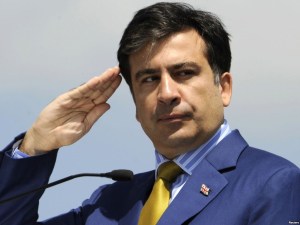
Former Georgian President Mikheil Saakashvili (Reuters)

Mikheil Saakashvili (Reuters)

Already the Georgian government is taking precautions in the case of such an eventuality. Prosecutions and questionings of UNM lawmakers and activists, including former President Saakashvili, on various unresolved controversies have increased in recent weeks. Also, Georgia’s Interior Ministry recently spoke of concerns with regard to UNM launching a Maidan-style revolution. Prime Minister Garibashvili has responded by declaring that “no one will dare to stir destabilization in this country while we are in the government” and that “if anyone has any such desire or attempt, they will be strictly punished.”  Indeed, in light of the recent Ukraine crisis, the UNM has become increasingly aggressive, nationalistic, and Russophobic, calling for sanctions against Russia by Georgia, an end to any diplomatic communication with Moscow, and for denial of “Russian aggression against Georgia” to be criminalized. From his base in Ukraine as an advisor to the Yatsenyuk government, Saakashvili has been particularly provocative, not only against his traditional enemy Russian President Putin, but also his domestic arch-rival Ivanishvili and the Georgian Dream government, which Saakashvili dismisses as “completely worthless.”

Certainly, the UNM could try to launch a Maidan-style revoltion even if Moscow does grant Tbilisi concessions on Abkhazia and South Ossetia. However, its effectiveness would be greatly diluted given its already declining popularity and the fact that a peace resolution on the two breakaways would seriously undermine their credibility even further among the Georgian public. Conversely, if Moscow attempted to entice Georgia into the Eurasian Union with no concessions on the breakaways, it would create an angry backlash in Georgian society on which the UNM could easily capitalize to launch a “Georgian Maidan” in Tbilisi. Saakashvili might even take advantage of this to restore his political career and return to the Georgian presidency in a coup d’état.

Given this, Russia has to very cautious and very prudent. The recognition of Abkhazia and South Ossetia back in 2008 has served its purpose by discrediting and neutralizing Saakashvili and by illustrating to the West the potential dangers of the Kosovo precedent.  Now Moscow has to consider its strategic priorities.  Specifically, Russia must ensure its security in the region as well as the overall stability of the Caucasus.

If Moscow can entice Tbilisi into its Eurasian Union, then this would be a major diplomatic success. If not, Russia will continue to be vulnerable to Western expansionism, not just in the Caucasus but in Central Asia as well.  Much of this depends on the outcome of tomorrow’s meeting as well as any future meeting between the Georgian and Russian leaderships. Already there are some concerns because a Georgian TV crew was detained yesterday for accidentally crossing the border into breakaway South Ossetia. Given Moscow’s concerns regarding Georgia, releasing these journalists should be a top priority, which in turn would build trust and confidence between both sides.

How to Defuse the Ukraine Crisis

Below are ten basic provisions that I believe may ameliorate not only the Ukraine crisis but also the broader tension that currently exists between Russia and the West. Not all readers will agree entirely with these positions, but hopefully they will become a starting point from which to defuse the situation, proceed forward, and create mutually friendly, not hostile, relations among all parties:

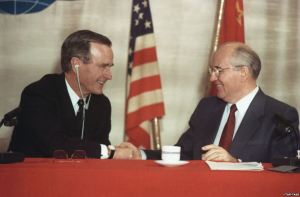
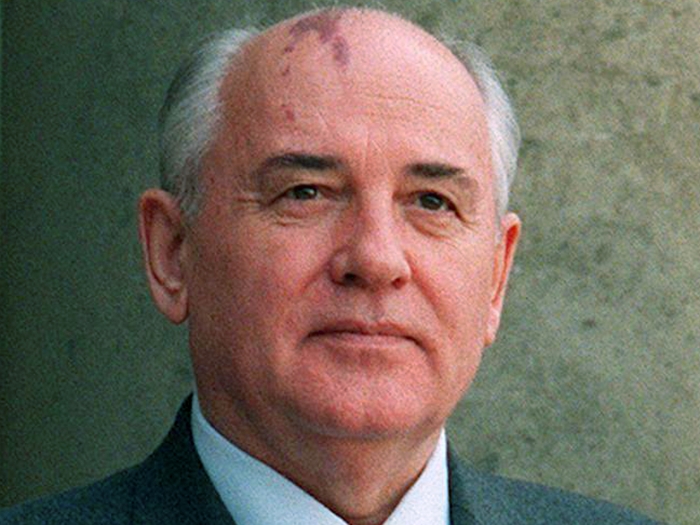
George H.W. Bush and Mikhail Gorbachev in Malta in December 1989 (ITAR-TASS).  The Bush administration informally promised Gorbachev that NATO would not expand "one inch" beyond East Germany.  The promise was never fulfilled.  To defuse the ongoing Ukraine crisis, a formal, written promise not to expand NATO by Washington to Moscow would do much to build mutual trust and confidence between both countries.

George H.W. Bush and Mikhail Gorbachev in Malta in December 1989 (ITAR-TASS). The Bush administration informally promised Gorbachev that NATO would not expand “one inch” beyond East Germany. The promise was never fulfilled. To defuse the Ukraine crisis, a formal, written promise not to expand NATO by Washington to Moscow would do much to build mutual trust and confidence between both countries.

1. The West and Russia should drop any mutual sanctions or restrictions against one another.

2. In order to encourage mutual trust, Moscow and Washington should make an unambiguous, official agreement prohibiting further expansion and encroachment of NATO into the former Soviet republics. Such an agreement must be clearly articulated in a written document, unlike the informal promise not to expand NATO made by US officials to former Soviet President Gorbachev in the 1990s.

3. The United States must promise to cancel the planned missile defense shield in Poland and the Czech Republic.

4. The United States should recognize Russia’s interests in the former Soviet states, including at least verbal support by Washington for the Moscow-based Eurasian Union, provided that it does not expand beyond the boundaries of the former Soviet states.

5. On Crimea, Washington, Brussels, and Kiev should recognize and accept Russia’s incorporation of the peninsula. This may be a difficult step to take, but the West and the Yatsenyuk government have to acknowledge that the area is demographically and historically Russian, and that it is home to Russia’s Black Sea Fleet. Moscow will not reverse this action and any attempts to force Russia to do so would be counterproductive. Therefore, Washington, Brussels, and Kiev should recognize the reality that Crimea is effectively part of Russia.

6. On Ukraine, both Moscow and Washington should express a desire to see Ukraine proper united and indivisible, and to adopt either an oblast-by-oblast federal system or a decentralized unitary system. Ukraine should declare military neutrality and should pursue integration into the Eurasian Customs Union based on Ukraine’s logical and historic economic ties with Russia; notwithstanding the fact that the EU economy currently cannot manage Ukraine. If Brussels were to bring in Ukraine, it would seriously threaten the stability and unity of the EU and would unravel the progress made over the decades of forging a united Europe. Both Russia and the EU should cooperate on helping Ukraine to strengthen its economy and state institutions by challenging the stranglehold of the Ukrainian oligarchs.

7. Given the fact that many Moldovan citizens are already EU citizens via Romanian passports, and that Moldova is becoming increasingly integrated with the EU, Moscow should recognize Moldova’s pro-European orientation.  In turn, Chișinău should relinquish its claims to Transnistria.  Depending on the situation in Ukraine and the will of the people of Transnistria, the latter could then reunite with the former as part of the multiethnic, Russophone Odessa Oblast. The new division would occur along the River Dniester, with all Moldovan-controlled areas on the right bank of the river being ceded to Transnistria, and all Transnistrian-controlled areas on the left bank being ceded to Moldova. The remaining Moldovan state would proceed with EU integration, but would declare military neutrality and disavow any intention of reunification with Romania.  Its relationship with the latter would then become akin to the relationship shared between Germany and Austria.  Such a resolution would alleviate ethnic concerns within Moldova, particularly with the Gagauz.

8. On Georgia, Moscow should promote (with the support of Washington) a federal solution for Georgia as well, making Abkhazia and South Ossetia federal states within a unified Georgian republic. The process for this should follow roughly along the lines of the proposed plan that I posted earlier. Like Ukraine, this new united Georgian federal state should declare military neutrality and, for economic, historical, and geographic reasons, should integrate into the Eurasian Customs Union.

9. On Armenia and Karabakh, the solution to this particular issue should be in the principle of self-determination for the Karabakh Armenians, though this is just an opinion. The aggressive and threatening rhetoric and actions from official Baku have only alienated the Karabakh people. Notably, Baku has also consistently denied basic human rights to its own ethnic Azerbaijani citizens. Thus, such a regime could not be trusted to rule over the people of this region. Aside from this, in order for there to be a realistic and lasting solution to this problem, Azerbaijan must open its borders with Armenia and civil society contacts must be enhanced. Armenians and Azerbaijanis can get along, but not when they do not see or communicate with one another. In their common humanity, they will find that peace and coexistence are possible, but the borders must be open first. Turkey too must open its border with Armenia.

10. Both sides should agree on a gradual convergence of the West and Russia (along with the former Soviet states) in economic, political, and military spheres, thus ensuring that all parties are on the same page with regard to the future of the post-Soviet space and post-Cold War world in general. There are so many more important priorities that need to be solved in the world (Iran, North Korea, Syria, etc.). Russia and the West need to cooperate on these issues and must not be in conflict. Further, such a solution would effectively help to realize the long-term goal of a united and indivisible Europe. It would also go a long way toward building trust with Moscow, thus creating the conditions for Russia to deepen its democratic development endogenously.

Crimea and Karabakh: A Precedent in the Caucasus?

Map of Armenia and the self-proclaimed Nagorny Karabakh Republic (NKR) in the Caucasus

Map of Armenia and the self-proclaimed Nagorny Karabakh Republic (NKR) in the Caucasus

Previous posts on this publication have been devoted to Ukraine, Georgia, and Moldova. Today’s post shifts the focus on Georgia’s southern neighbor, Armenia. Like Georgia, Armenia shares a very strong sense of national pride, related to its unique art and culture as well as its centuries-old history. Also like the Georgians, Armenians are independent-minded and are generally adverse to Russian imperialism, though, again like their Georgian counterparts, they are also fond of the Russian culture and people. Indeed, Armenia is an ancient Christian country with a long tradition of statehood. The Christian faith arrived here via two of the original twelve apostles of Christ and in AD 301, Armenia became the first nation to officially adopt Christianity as its national faith. This had a profound impact on the development of Armenia’s cultural and literary traditions and resulted in the creation of the unique Armenian alphabet invented in the 5th century and written horizontally from left-to-right, thus indicating a Western orientation. At the same time, similar developments also profoundly affected Georgia, which also adopted a unique alphabet with a left-to-right directionality.

Armenia, along with Georgia, Ukraine, and Moldova, was one of four countries that actively participated in the Brussels-backed EaP.  Yet, on September 3, 2013, Yerevan made a sudden volte-face on signing its Association Agreement deal with the EU (basically the same deal that Ukraine later refused in November). Instead, it opted for membership in Moscow’s Eurasian Union. This shocked many commentators, who at the time viewed Armenia’s signing of the EU Association Agreement as a foregone conclusion. Many observers, both inside and outside of Armenia, quickly concluded that the Armenia’s President Serj Sargsyan was pressured by Russian President Vladimir Putin to join the Eurasian Union.

Armenia's Serj Sargsyan and Russia's Vladimir Putin immediately after their 3 September meeting.

Armenia’s Serj Sargsyan and Russia’s Vladimir Putin immediately after their 3 September meeting.

However, I believe that it is more plausible to conclude that Sargsyan managed to squeeze out the best possible terms for Eurasian Union membership from the Kremlin. This would explain the body language between the two leaders when the decision was announced. Sargsyan was visibly pleased, as if he had received something, whereas Putin looked somewhat satisfied, though also as if Sargsyan had extracted major concessions out of him. Sargsyan has stated publicly to the Armenian media that he managed to secure “major concessions” from the Russian leader. What these concessions are is not yet known. However, they must have been quite substantial since Armenia was willing to sell the remaining 20% share of its gas sector to Russia’s Gazprom and guarantee that this agreement would remain unchanged until 2043. This action remains controversial with both within the Armenian parliament and on the streets of Yerevan, where Armenian students have launched demonstrations against it. The vote to validate the deal was boycotted by the opposition in the Armenian parliament. Still, though, the basic idea of joining the Eurasian Union has been broadly endorsed by all sectors of the Armenian political elite, including one of Sargsyan’s most vocal critics, former President Levon Ter-Petrosyan. Though Sargsyan has not yet announced the benefits of Eurasian Union membership for Armenia, they are likely tied to security concerns stemming from the dispute with Azerbaijan over Nagorny Karabakh.

Oleh Tyahnybok, leader of Ukraine's far-right Svoboda party (zbroya.info)

Oleh Tyahnybok, leader of Ukraine’s far-right Svoboda party (zbroya.info)

Then in yet another more recent shocking move, on March 27 Armenia voted with Moscow against a UN Resolution condemning the incorporation of Crimea into Russia. Earlier, Yerevan seemed to have at least partially endorsed the Crimean move, with Sargsyan phoning Putin and hailing it as “yet another example of realization of peoples’ right to self-determination through a free expression of will.” The latter caused a slight rupture in Ukrainian-Armenian relations.  Oleh Tyahnybok, the leader of the far-right Svoboda party, urged the recall of Kiev’s ambassador to Yerevan, a demand with which the Yatsenyuk government eventually complied. What is behind Armenia’s pro-Russian posturing on Crimea? Is it under pressure from Moscow with regard to security and energy ties? Possibly. However, a far more likely scenario is that the Armenians actually see a precedent in Crimea for Nagorny Karabakh.

The famed 13th century Gandzasar Monastery in Karabakh.

The famed 13th century Armenian Gandzasar Monastery in Nagorny Karabakh (Gandzasar.com)

So what exactly is Nagorny Karabakh and why does Armenia attach such importance to it? Nagorny Karabakh is a disputed, mountainous region sandwiched between Armenia and Azerbaijan. Its very name is a testament to its checkered history with “nagorny” being Russian for “mountainous,” “kara” being Turkish for “black,” and “bakh” being Farsi for “garden.”  The current Armenian President Sargsyan is a native of Karabakh as was his predecessor Robert Kocharyan. De jure Karabakh is recognized internationally as being part of Azerbaijan. De facto the region is a self-proclaimed independent state, closely tied with Armenia. Yet no state, including Armenia, presently recognizes it internationally.  The landscape of Karabakh is littered with old, historic Armenian churches and monuments. Its local population is comprised entirely of ethnic Armenians who speak their own distinct musical dialect, heavily influenced by Russian and Farsi with significant remnants of the old Classical Armenian or grabar (the Armenian equivalent of what Old Slavic is to Russian or Ukrainian or what Latin is to Italian).  The dialect is so unique that even native Armenian speakers have difficulty understanding it.  The Karabakh Armenians are known as a strongly independent mountain people and are said to be “more Armenian than Armenians.” Many prominent Armenian military figures that fought in the armies of Tsarist Russia and the USSR came from Karabakh. During World War II, a significant number were renown for their bravery in the war.

We Are Our Mountains (also known as Tatik u Papik (Grandma and Grandpa) in Armenian), a statue that is widely regarded as a symbol of Karabakh's identity.  It was completed by the sculptor Sargis Baghdasaryan in 1967. (Barev Armenia.com)

We Are Our Mountains (also known as Tatik u Papik (Grandma and Grandpa) in Armenian), a statue that is widely regarded as a symbol of Karabakh’s identity. It was completed by the sculptor Sargis Baghdasaryan in 1967 and is located near Stepanakert, the capital of the self-proclaimed Nagorny Karabakh Republic. (Barev Armenia.com)

The area of Nagorny Karabakh, known as “Artsakh” in Armenian, is of particular significance to Armenians historically and culturally. Historically, it formed one of the easternmost provinces of the Kingdom of Armenia.  Along with the province of Utik, Artsakh was disputed at times with the neighboring Caucasian Albanians, a Christian people, unrelated to the Albanians of the Balkans, whose core homeland encompassed significant portions of modern Azerbaijan east of the Kura River, west of the Absheron and Shirvan, and south of the Greater Caucasus range. In the Middle Ages, the Kingdom of Armenia enjoyed significant prosperity under the Bagratuni dynasty which also had a branch ruling in neighboring Georgia. This kingdom collapsed amid Armenian infighting, Byzantine opportunism, and invasions by the Seljuk Turks. It was only the province of Artsakh (today’s Nagorny Karabakh) along with the neighboring region of Syunik (today the southermost province of Armenia) that managed to maintain some level of independence and autonomy. Together, these two regions became to Armenia what Piedmont-Sardinia became to Italy. To Armenians, they became a center for national liberation and unification.

18th Century Armenian diplomat Israel Ori

18th Century Armenian diplomat Israel Ori sought the aid of Peter the Great to free Armenia and Georgia from Persian suzerainty.

By the 18th century, both regions were still governed by Armenian nobles and were under Persian suzerainty with Artsakh now known by the name of “Khachen.” The local Armenian nobility was eager to secure protection from a Christian power and thus sought aid from Imperial Russia. The diplomat Israel Ori was especially notable in this regard. A noble from Sisian in the Syunik region, Ori secured an audience with Tsar Peter the Great, in which he detailed the persecution of the Armenian and Georgian people who lived under the sphere of Persia and under the rule of the Ottoman Empire. Peter, already interested in gaining access to the silk and spices of Persia, Central Asia, and India, now found an additional reason to expand Russia into the Caucasus. He readily agreed with Ori’s proposal and sent a delegation to Etchmiadzin, the seat of the Armenian Apostolic Church (then under Persian rule).

Davit Bek as portrayed by Hrachia Nersisyan for the 1944 Soviet Armenian feature of the same name.  The film was meant to foster patriotic feelings among Armenians during the time of the Nazi invasion of the USSR.

Davit Bek as portrayed by Hrachia Nersisyan for the 1944 Soviet Armenian feature of the same name. The film (the Armenian equivalent to Eisenstein’s Aleksandr Nevsky) was meant to foster patriotic feelings among Armenians during the time of the Nazi invasion of the USSR.

Unfortunately, Ori died in 1711 and thus was unable to see his dream realized. Yet, he nevertheless laid the groundwork for Russia’s intervention in the region. The movement for the liberation of the Caucasus from Persia continued under the Armenian Catholicos Asdvadzadur as well as the Georgian King Vakhtang VI the Scholar (whose descendent would later be Prince Pyotr Bagration, the great hero of the Napoleonic War). Having soundly defeated the Swedes in the Great Northern War in 1721, Peter finally set his sights on the Caucasus. The time seemed perfect as Persia had descended into a civil war. Vakhtang camped in Ganja (in present-day Azerbaijan) with a Georgian-Armenian force 40,000 strong awaiting Peter’s army. He hoped that the Tsar would liberate Georgia and Armenia from the Persian and Ottoman yoke. However, Peter’s Caspian and Caucasian campaigns against Persia proved disastrous and the Russian aid never arrived. Feeling threatened by Russia and taking advantage of internal turmoil in Persia, the Ottoman Empire intervened to violently attack the Georgians and Armenians for entertaining the idea of Russian aid. However, Davit Bek, an Armenian rebel leader of noble stock in the service of the Georgian court managed to hold off the Turks until his death in 1728.  In 1736, Nader Shah reasserted Persian authority over the region and reaffirmed the autonomy of the Armenian princes, who had assisted Persia in expelling the Ottomans.

Following the death of Nader Shah in 1747, the regional autonomies of Khachen and Syunik lasted until 1750 when both were incorporated by a local Muslim Khan into the neighboring Karabakh Khanate with the aid of an Armenian prince. This was a consequence of the fact that the region had since become engulfed in infighting among its different Armenian noble families. The local nomadic Turkic Muslim population (the predecessors of today’s Azerbaijanis) saw an economic connection between the lowland Karabakh area that they had known within their khanate and the highland Khachen principality. They used both areas alternatively for seasonal grazing of their sheep. The incorporation of highland Khachen into the Karabakh Khanate only reinforced this perception of economic unity with Lowland Karabakh among the Turkic nomads. Henceforth, the Armenian region of Khachen gradually became known as “Highland Karabakh” in contrast with the neighboring lowland areas located entirely within present-day Azerbaijan that had been already known as Karabakh.

Eventually, the Russians managed to secure a foothold in the region with the annexation of Georgia in 1800. Then in 1813, St. Petersburg renewed its assault on Persia, seizing Baku and the Caspian coastline and further inland, Highland Karabakh and Syunik (also known by now by the name of “Zangezur” after the area’s distinct mountain range). It was not until 1828 that Russia managed to acquire the remainder of the present-day Armenian republic with Yerevan and Etchmiadzin. Yet, the dates here are significant for Highland Karabakh remained administratively outside of the confines of the Erivan (Yerevan) guberniya (province) within the Russian Empire.

The remants of the Armenian quarter of Susha after the pogrom of March 1920.

The remnants of the Armenian quarter of Susha after the pogrom of March 1920 (US National Archives).

With the collapse of Russian power in the region following the Russian Revolution of 1917 and the Russian Civil War, the Caucasus at first attempted to unite into a single Transcaucasian Federation. This attempt at unity failed between both the external ambitions of the Ottoman Empire and internal divisions among the Caucasus peoples. The federation was dissolved and three new states emerged: Armenia, Georgia, and Azerbaijan. Armenia was constantly under threat from the Ottomans who had initiated a systematic campaign of genocide against their Armenian population in 1915 in which 1.5 million Armenians perished. A large number of starving refugees from the genocide poured into the newly-independent republic and the government in Yerevan had few resources to deal with them. The new republic also faced territorial disputes. The dispute over Highland Karabakh with neighboring Azerbaijan proved especially contentious. Ethnic violence engulfed the region. A Karabakh Armenian uprising in March 1920 was violently crushed by Azerbaijani forces and an anti-Armenian pogrom ensued in the town of Shusha (also known as Shushi).

By the time of the region’s Sovietization, the area passed into provisional Azerbaijani control, though this was deeply resented by the local Armenians. Meanwhile, the Armenian Republic itself was absorbed by the Bolsheviks in 1920, with Moscow ceding some portions, including the Armenian national symbol Mount Ararat and the ruins of the historic medieval Armenian capital Ani, to now-Kemalist Turkey.  The Bolshevik presence in Armenia was met with significant resistance in Syunik.  In 1921, the Armenian mountaineers of this region fled to the highlands and launched a major revolt against Soviet rule. The situation was so intensely out of control that the Soviet military was called in to establish order.  To placate the Armenians and to subdue the rebels, the Soviets periodically promised that the region of Highland Karabakh would be incorporated into Soviet Armenia.

In the end, the Soviets managed to crush the rebellion. The highland mountaineers of Syunik fled across the border into neighboring Iran. The crushing of the rebellion literally occurred just as the Kavburo was voting to determine whether or not Highland Karabakh should become part of Soviet Armenia. Initially the delegates voted in favor of this but when the fortunes changed on the ground in Syunik, the Soviet Azerbaijani leader Narimanov managed to convince his colleagues that there was no need to make Highland Karabakh part of Armenia anymore. He further threatened Soviet leaders with a possible cessation of oil supplies from Baku. Eager to avoid this and to quickly resolve territorial issues to maintain their control in the region, the Bolsheviks acceded to Narimanov’s demand. Hence the decision was reversed and Highland Karabakh was granted to Soviet Azerbaijan provided that it be granted autonomy in order to satisfy the local Armenian population. Such a decision was never accepted by the Armenian locals who wanted to be part of Soviet Armenia.

Yerevan 1988

Yerevan 1988

Throughout the Soviet era, the Karabakh Armenians periodically petitioned Moscow for the area to be reassigned to Armenia with no success. When Mikhail Gorbachev initiated his policy of glasnost (political openness) in the late 1980s, the Karabakh Armenians seized the opportunity. Petitions, accompanied by peaceful protests in both Armenia and Karabakh, requested that the Soviet leader transfer the region to Armenia. By February 1988, the demonstrations in Yerevan had grown to as many as one million people (about one third of the Armenian population). Fists raised, the protestors shouted slogans such as “Ka-ra-bakh” and “Hay-as-stan” (the Armenian name for Armenia). In addition to Karabakh, the protests also focused on other issues as well, notably environmental concerns such as clean air and the controversial Metsamor Nuclear Power Plant. The leaders of the demonstrations were a group of individuals known as the “Karabakh Committee.” However, unlike Zviad Gamsakhurdia in Georgia, the leaders of the Karabakh Committee like Levon Ter-Petrosyan, Vazgen Manukyan, Ashot Manucharyan, Hambartsum Galtsyan, and others were not national chauvinists but liberals influenced by progressive Thaw-era Soviet values.

Memorial to the Armenian Earthquake Victims, Washington, D.C. (Panoramio)

Memorial to the Armenian Earthquake Victims, Washington, D.C. (Panoramio)

Unfortunately, the situation turned violent when anti-Armenian pogroms broke out in the Azerbaijani city of Sumgait. The protests in Armenia and Karabakh became even more impassioned and tension between Armenians and Azerbaijanis only continued to rise. Soon, all Armenians from Azerbaijan left for Armenia and all Azerbaijanis left Armenia for Azerbaijan. The horrible earthquake in Armenia in December 1988 only seemed to compound the crisis. Measuring a magnitude of 6.8 on the Richter scale, between 25,000 to 50,000 people died and as many as 130,000 were injured. Azerbaijan also instigated a total blockade against Armenia and Karabakh, preventing the delivery of crucial relief aid to Armenian earthquake victims. Meanwhile, Moscow’s perceived inaction on the crisis by local Armenians fueled the growth of a national secessionist movement in Armenia by 1990.

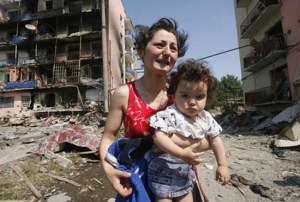
Armenian Refugees from Karabakh.  The conflict over the disputed territory displaced hundreds of thousands of civilians on both sides. (BBC World News)

Armenian Refugees from Karabakh. The conflict over the disputed territory displaced hundreds of thousands of civilians on both sides. (BBC)

By the time both Armenia and Azerbaijan achieved independence from the USSR in 1991, the conflict over Karabakh had erupted into a full-scale war. The war left tens of thousands of people dead or displaced on both sides. Though the Karabakh Armenians managed to secure their own de facto independence and a “buffer zone” of territory connecting them to Armenia proper, Turkey joined a blockade against Armenia and Karabakh. This precipitated a grave energy crisis that was only compounded by economic difficulties and a large number of IDPs from the war and the 1988 earthquake. The borders with Turkey and Azerbaijan remain closed and the situation has remained very tense since. Consequently, a Russian military base in Armenia, located on the Turkish-Armenian border plays a major role as a guarantor for stability and security in the region.

Azerbaijani President Ilham Aliyev

Azerbaijani President Ilham Aliyev

Meanwhile, exploiting its oil resources, Azerbaijan has increased its military spending in recent years and has been empowered to be even more nationalistic. President Ilham Aliyev’s controversial statements have raised serious concern in Yerevan. In speeches and messages, he has referred to Armenia as a “country of no value,” stated that “Armenians are guests in Yerevan,” and that the Karabakh Armenians should accept Azerbaijani rule or be forced to emigrate. Official Baku likewise refuses to allow individuals bearing Armenian surnames to enter their country (even if they are not citizens of Armenia) and has maintained the blockade against Armenia, preventing crucial civil society and people-to-people contacts so important to a lasting peace.

In September 2012, Aliyev declared Ramil Safarov a “National Hero.” Safarov killed a young Armenian man in his sleep with an axe during a NATO Partnership for Peace seminar. In February 2013, an Azerbaijani author, Akram Aylisli, who has called for peace and dialogue in the Karabakh dispute, was threatened by officials affiliated with Azerbaijan’s ruling political party who have called for a bounty on the author’s ear for $15,000 and who have staged public book burnings of his works. Indeed, the level of anti-Armenian sentiment prompted one popular Russian-Jewish television journalist to draw parallels between the official Azerbaijani attitude toward Armenians and that of Nazi Germany toward the Jews. All of this has only evoked painful memories among Armenians about the tragic 1915 Genocide and has only fueled greater distrust between Armenians and Azerbaijanis. It also has reinforced the need for Russian security in the region.

Now with the Crimea united with Russia, many in both Armenia and Karabakh see the potential possibility for a direct reunification between their two entities in the case of a future Azerbaijani attack. The precedent of the incorporation of Crimea into Russia via a democratic plebiscite has certainly buoyed hopes in Karabakh for the region’s eventual reunification with Armenia, even if Yerevan-based analysts have emphasized that the two situations are entirely different. Meanwhile, official Baku has been noticeably quiet in the midst of all of this. What will happen next remains to be seen.

How the West Got Moscow’s Eurasian Union Wrong

Will Rogers (Biography)

Will Rogers (Biography)

Will Rogers, the noted American entertainer and radio personality, once famously joked that “Russia is a country that no matter what you say about it, it’s true.” This holds true today, especially in the Western press.

One example of this is the Russian initiative to form the Eurasian Union, a supranational union comprised of former Soviet republics. This has been largely criticized in the West as either a “New Russian Empire” or a “New Soviet Union.” In 2012, former US Secretary of State Hillary Clinton referred to the project as a “move to re-Sovietise the region.” While acknowledging that the Eurasian Union will not be called “the Soviet Union,” she also stressed “let’s make no mistake about it. We know what the goal is and we are trying to figure out effective ways to slow down or prevent it.” Timothy Synder, the author of Bloodlands: Europe Between Hitler and Stalin, went even further in his denunciation of the concept, referring to it as the realization of the anti-liberal neo-fascist Eurasianist schemes of Aleksandr Dugin. He specifically cited Dugin as “the ideological source of the Eurasian Union” and that his work constitutes “the creed of a number of people in the Putin administration.”

Beyond the headlines, though, what exactly is the Eurasian Union? Is it truly an anti-Western conspiracy of neo-fascists, Bolsheviks, and boogie men opposing liberal ideals worldwide which, like Soviet communism, needs to be “contained?” Or rather is it a supranational liberal economic union promoting free trade and open borders with the former Soviet republics who already share close historical, economic, and cultural links with Russia? For the answer to this question, one must turn to the history of the Eurasian Union idea. Indeed, if one explores the history of the Eurasian Union concept, one discovers that its originator was not Aleksandr Dugin, but in fact, Mikhail Gorbachev.
Mikhail Gorbachev

Mikhail Gorbachev

As the Soviet system and Soviet communism was collapsing in the early 1990s, then-Soviet President Gorbachev took a bold step that is often overlooked: he proposed the basic framework for a reformed Soviet state. The new state would be a non-communist democratic federation (under Gorbachev, the Communist Party already began to lose its monopoly on power in 1989, a fact that became official with his creation of the Soviet Presidency in March 1990).

Gorbachev anticipated a referendum in which Soviet voters would be given the choice to vote on the establishment of this new state in March 1991. This referendum on a New Union Treaty was approved by the vast majority of Soviet citizens, including those in then-Soviet Ukraine, who favored it by 82%. It should be noted that a significant number of West Ukrainian activists had boycotted Gorbachev’s referendum, but even if one were to include the boycotted votes as “no” votes, then the overwhelming majority of Ukrainians still favored Gorbachev’s new union by a wide margin. Additionally, the only other Soviet republics that boycotted the referendum were the three Baltic states (which sought independence), Moldova (which sought to reunify with Romania), Armenia (which was frustrated with Moscow over its indecision on Nagorny Karabakh), and Georgia (under the influence of nationalist dissident leader Zviad Gamsakhurdia). Other than this, the referendum passed overwhelmingly.
Boris Yeltsin

Boris Yeltsin

Despite the fact that the referendum was favored by the vast majority of Soviet citizens, it was never implemented. In August 1991, communist hardliners, who bristled at Gorbachev’s glasnost, put the Soviet leader under house arrest in Crimea. In the end, the putschists were faced down by the leader of the then-Soviet Russian republic, Boris Yeltsin and the coup collapsed. Following the coup, Gorbachev sought to pursue the establishment of the new union that the majority of Soviet citizens favored in the March referendum. However, Yeltsin insisted on a confederation of states as opposed to a state federation. Gorbachev was initially opposed, fearing that a confederation would lead to disaster. However, in the end, Gorbachev relented and backed the confederation proposal.

However, even the idea of a confederation was not realized. Without Gorbachev, Yeltsin, along with Ukraine’s Lenoid Kravchuk and Belarus’ Stanislav Shushkevich, formally dissolved the Soviet state at meeting in the Belavezha Forest. Gorbachev lost his position and the 15 Soviet republics were now formally independent states, with some, like the Baltics, Armenia, and Georgia, proposing independence referendums earlier. However, Yeltsin apparently did not want to totally severe Russia’s ties with the other former Soviet states (now known as the “near abroad”). Indeed, the Belavezha Accords also gave birth to the Commonwealth of Independent States (CIS), a loose association of 12 of the 15 former Soviet republics (understandably, the Baltics for historical reasons did not participate).
Nursultan Nazarbayev

Nursultan Nazarbayev

During his administration, Yeltsin never formally lost sight of maintaining Russia’s links with the former Soviet states, despite major problems in Russia itself (most of which were arguably the result of his own policies). In 1992, the Collective Security Treaty Organization (CSTO) was formed, initiating a sort of military alliance among the various ex-Soviet states. Two years later in 1994, in an address to a Moscow university, Kazakhstan’s Nursultan Nazarbayev proposed an early concept for an EU-style supranational union of the ex-Soviet states. Then in 1996, this idea evolved into the Treaty on Increased Integration in the Economic and Humanitarian Fields signed by Belarus, Kazakhstan, Kyrgyzstan, and Russia.  This was followed by the Treaty on the Customs Union and the Single Economic Space in 1999 signed by the same countries along with Tajikistan.  Finally, in 2000, the Eurasian Economic Community (EurAsEC) was formed.

Again, I have cited three individuals in this historical overview: Gorbachev, Yeltsin, and Nazarbayev.  All three favored some sort of integration and association among the former Soviet states prior to the major writings of Aleksandr Dugin in 1997, including his controversial fascist-Eurasianist work The Foundations of Geopolitics. The assertions that the Eurasian Union, at its heart, is a Duginist scheme do not take into account the integration processes that were already in progress within the former Soviet Union and therefore are both incorrect and anachronistic.

It can likewise be definitively concluded that, given the fact that organizations like the EurAsEC serve as a direct predecessor to today’s Eurasian Customs Union, the ideology and political philosophy of Moscow’s present-day post-Soviet integration effort is not intended to be a conspiratorial neo-fascist or anti-Western coalition. Rather, it is at its core a liberal idea, intended to promote open borders, free trade, and economic and cultural exchange among the ex-Soviet states, who already share much culture with Russia. In the words of fellow Russia watcher and commentator Mark Adomanis:

Without lapsing into cartoonish Kremlinology, I do think it’s noteworthy and important that Putin is so publicly and forcefully going on the record advancing a broad program of technocratic neoliberalism: harmonizing regulations, lowering barriers to trade, reducing tariffs, eliminating unnecessary border controls, driving efficiency, and generally fostering the free movement of people and goods. Even if not fully sincere, an embrace of these policies is healthy.

…Anything that makes Russia more open to people and commerce is positive and can only serve, in the long-term, to weaken the foundations of its current hyper-centralized system.

Efforts toward Eurasian integration continued apace under the Putin presidency. According to Mikhail Gorbachev in a 2009 interview with the Moscow-backed network RT, Ukraine seemed to have expressed interest in the project as well:

We were close to creating a common economic zone, when Kuchma was still in power. These four countries – Russia, Belarus, Ukraine and Kazakhstan had 80% of the potential of the whole Soviet Union. It was a great force. And if you look at all the natural resources… But then many things got in the way of this process – Caucasus, Ukraine.
US President George W. Bush with Georgia's Mikheil Saakashvili

US President George W. Bush with Georgia’s Mikheil Saakashvili

The “things” to which Gorbachev referred were efforts by the United States to expand its geopolitical sphere of influence deep into post-Soviet territory, particularly in Ukraine and Georgia. The US administration of George W. Bush, with the aid of Western NGOs and both major American political parties, sought to promote pro-Western “color revolutions” in the ex-Soviet states. They aggressively focused particularly on Georgia, which was Moscow’s historic “center” in the Caucasus, and Ukraine, a country with which Russia shares deep historical, cultural, economic, and even personal ties. The spread of such revolutions also happily, and not coincidentally, intersected with American and Western energy interests in the region. American oil companies showed particular interest in resource-rich states like Azerbaijan and the “stans” of Central Asia.
George F. Kennan

George F. Kennan

The new leaderships of both Ukraine and Georgia also set an overtly pro-Western course to join both the EU and NATO, much to the Kremlin’s annoyance. In the early 1990s, the administration of US President George H. W. Bush squarely promised Soviet leader Mikhail Gorbachev that NATO would “not move one inch eastward” beyond East Germany as a means to ensure Soviet support for German reunification. However in 1997, under the Clinton administration, the United States backpedaled on its promise to Moscow by inviting several former Warsaw Pact countries into NATO and also intimating the promise of EU membership. Though accepted by Yeltsin, the expansion of NATO by Washington annoyed and antagonized Moscow. In this regard, the words of the great diplomat, George F. Kennan in February 1997 were especially prophetic:

Expanding NATO would be the most fateful error of American policy in the entire post-cold war era. Such a decision may be expected to inflame the nationalistic, anti-Western and militaristic tendencies in Russian opinion; to have an adverse effect on the development of Russian democracy; to restore the atmosphere of the cold war to East-West relations, and to impel Russian foreign policy in directions decidedly not to our liking.

Gorbachev echoed this sentiment in his 1999 book On My Country and the World:

The danger of a new division of the continent has arisen with NATO’s expansion to the East, which will inevitably encourage military preparations in a number of countries on the continent.
Václav Havel

Václav Havel

However, neither Kennan’s nor Gorbachev’s words were ever heeded by Washington policymakers. Eventually, both NATO and the EU expanded to include virtually all of the former Warsaw Pact states in Central-Eastern Europe as well as the three former Soviet Baltic states. The late Czech President Václav Havel likewise observed that while the Kremlin was annoyed by NATO expansion in Central-Eastern Europe, the expansion into the three Baltic states caused even greater concern to them. Now NATO was on the very doorstep of St. Petersburg. Havel specifically recalled in his 2007 memoir To the Castle and Back:

It was no longer just a small compromise, but a clear indication that the spheres of interest once defined by the Iron Curtain had come to an end. Yeltsin had generously supported Czech membership in NATO, but the Baltic republics must have been very hard for Putin to swallow.

Feeling threatened by the prospect of further NATO expansion and by the provocative behavior of the new “color revolution” governments in Kiev, and especially Tbilisi (with Georgian President Mikheil Saakashvili being especially antagonistic), Moscow redoubled its post-Soviet integration efforts. The groundwork for the present-day Eurasian Customs Union was first laid in August 2006 at an informal EurAsEC summit meeting in Sochi between Putin, Nazarbayev, and Belarus’ Aleksandr Lukashenko.

Efforts toward forming the actual Customs Union intensified in 2008, the year of the NATO Bucharest Summit, the South Ossetian war, and the start of the Eurozone crisis.  They intensified even more the following year, especially after the official formation of the EU’s Eastern Partnership (EaP) program to bring ex-Soviet republics like Ukraine and Georgia into the EU. In November 2009, the Presidents of Belarus, Kazakhstan, and Russia officially agreed to form the customs union in Minsk. On 1 January 2010, the Customs Union of Belarus, Kazakhstan and Russia (today the Eurasian Economic Community Customs Union) was officially launched. In November 2011, the leaders of the three countries met and set 2015 as the target date for establishing the new supranational union. It also recognized the Eurasian Economic Commission, paving the way for the Eurasian economic space in 2012.
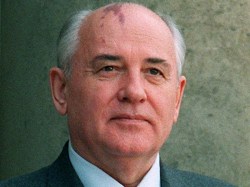
Mikhail Gorbachev (NBC)

Mikhail Gorbachev (NBC)

The primary Russian motive behind the establishment of the Eurasian Union is not historic imperial ambition. In fact, from a Russian perspective, some of the ex-Soviet countries can be viewed as a liability. However, for economic, historic, geopolitical, and security reasons, they are viewed as essential. For Moscow, their necessity has been even more pronounced in light of recent American and Western efforts to aggressively expand NATO into the post-Soviet space, despite earlier promises to the contrary. Yet none of this changes the fact that the prevailing popular perception of the Eurasian Union in the West and among some in the former Soviet countries is that it is a “new Russian empire,” a sad commentary on that which is a falsely propagated historical perspective. In his 2009 interview with RT, Gorbachev, referring to the US-backed “color revolution” governments, stated that “they keep thinking that Russia wants to create a new empire.” When asked whether or not this was the case, he immediately responded:

Not at all. Putin was giving an interview to Le Figaro. He got the same question about imperial ambitions. His answer was a definite no. Russia’s position [by Yeltsin] defined the fall of the Soviet Union. If it were not for Russia, the Soviet Union would still exist. This was the first time I heard this revelation from Putin. I think we need economic co-operation [in the former USSR].

Russian Prime Minister Dmitry Medvedev expressed the same opinion in an interview with Georgian television in August 2013 where he stated that the CU “is not about restoring the Soviet Union. Who needs the restoration of the Soviet Union? We live in the 21st century.”
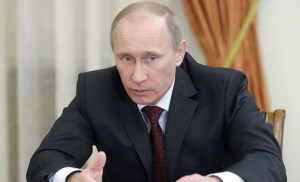
Russian President Vladimir Putin

Russian President Vladimir Putin

The perception of the CU as a “new Russian empire” happily coincides with Western geopolitical distrust of Russia and with prevailing narratives in the Western media that Russia is engaging in “19th century diplomacy” and that Putin has “neo-Soviet” ambitions (which is a misnomer because Putin is a moderate nationalist, not a communist). Further, in April 2005, Putin himself publicly lamented the breakup of the USSR as the “greatest geopolitical catastrophe” of the 20th century. In that quote, Putin was referring to the conglomerate of republics (USSR), not communism. Though this sentiment is widespread in the former USSR and has been even endorsed by Mikhail Gorbachev, many in the West have taken this quote as evidence of Putin’s clandestine neo-imperial agenda. The same quote has only heightened suspicions toward the CU among many in the former Soviet republics as to the real intentions of the Kremlin-backed geopolitical project. Also, a month later, Putin even clarified his remarks in an interview with German television by stating:

Germany reunites, and the Soviet Union breaks up, and this surprises you. That’s strange.

I think you’ve thrown the baby out with the bathwater – that’s the problem. Liberation from dictatorship should not necessarily be accompanied by the collapse of the state.

As for the tragedy that I talked about, it is obvious. Imagine that one morning people woke up and discovered that from now on they did not live in a common nation, but outside the borders of the Russian Federation, although they always identified themselves as a part of the Russian people. And there are not five, ten or even a thousand of these people, and not just a million. There are 25 million of them. Just think about this figure! This is the obvious tragedy, which was accompanied with the severance of family and economic ties, with the loss of all the money people had saved in the bank accounts their entire lives, along with other difficult consequences. Is this not a tragedy for individual people? Of course it’s a tragedy!

People in Russia say that those who do not regret the collapse of the Soviet Union have no heart, and those that do regret it have no brain. We do not regret this, we simply state the fact and know that we need to look ahead, not backwards. We will not allow the past to drag us down and stop us from moving ahead. We understand where we should move. But we must act based on a clear understanding of what happened.

Overall, the Eurasian Union concept is not new.  It is not a Russian imperial conspiracy rooted in Duginist neo-fascist tracts, but rather a liberal pro-market project aimed at opening borders and encouraging economic development among the former Soviet states.  It is this reality that the West should fundamentally understand when analyzing Russia’s Eurasian Union initiative.

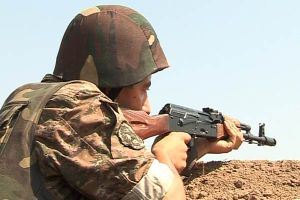
An 8-Point Resolution on Georgia

As the leaders of the Russian and Georgian governments prepare to meet one another for the first time since 2008, a historic opportunity awaits them to pave the way for not only mutual reconciliation but also a peaceful settlement to Georgia’s protracted territorial conflicts. Below is my recommended 8-point resolution to the Georgian-Abkhaz-South Ossetian conflict, a resolution that I believe could potentially pave the way for a more united Caucasus and for a more united post-Soviet space:

UN Map of Georgia, 2014

UN Map of Georgia, 2014

1. A non-use-of-force agreement should be adopted by all sides, especially Georgia vis-a-vis Abkhazia and South Ossetia and Russia vis-a-vis Georgia. An agreement like this will serve to build confidence on all sides leading to a peaceful resolution. This is especially true in the case of Russia. Even though Moscow claims that it is not a party to the dispute, a non-use-of-force agreement regarding Georgia would go a long way toward building trust with Tbilisi.

2. Official Tbilisi should agree to end its ambitions to join NATO and the EU, thus providing Russia with a sense of security and enhancing the conditions for mutual trust.

3. Borders between Russia and Georgia and between Georgia and Abkhazia and Georgia and South Ossetia should be reopened. The Abkhazian railway should also be reopened and should resume traffic immediately.

4. An arrangement whereby Abkhazia and South Ossetia become co-equal members with Georgia in a united Georgian federal republic should be agreed upon. This would make Abkhazia and South Ossetia to Georgia proper like what Scotland and Wales are to England in the United Kingdom. The Georgians would ideally favor making the two regions autonomous within a unitary Georgia state, while the Abkhaz would favor outright independence, and the South Ossetians would favor unifying with the Russian republic of North Ossetia–Alania. However, none of these scenarios are realistic nor do they constitute a lasting peaceful resolution. Consequently, a federal solution would serve as a compromise and thus works best.

Georgian woman and child during the war of 2008.  (Reuters/David Mdzinarishvili)

Georgian woman and child during the war of 2008. (Reuters/David Mdzinarishvili)

5. Refugees. In Abkhazia, over 40,000 Georgian refugees have already returned. Georgia must recognize this and both sides must agree on the return of an additional, though very limited, number of Georgian refugees, with the rest being settled in government-funded housing in Georgia proper. Again, it should be stressed that the number of returnees must be very limited and should not dramatically shift the demographic balance of Abkhazia which in turn would create conflict and instability. Sukhumi would never accept the return of all Georgian refugees, especially if it meant making the Abkhaz a minority in their own republic again. For their part, Tbilisi must see and understand the Abkhaz ethnic sensitivities if they are serious about achieving Georgian unity. As for South Ossetia, all Georgian refugees should return, especially those expelled after the hostilities in 2008.

6. The accession of the united Georgian federal state to the Eurasian Customs Union. This would ensure the economic viability of the new state. By contrast, membership in the economically tenuous EU would threaten and seriously undermine its stability. Another benefit of the Customs Union is that it would ensure Russian protection of the Abkhaz and the Ossetes and guarantee the South Ossetians free access to the brethren in North Ossetia, while simultaneously remaining a formal part of Georgia.

7. Switch all Abkhaz, South Ossetian, and Georgian passports to passports of the new Georgian federal state. All Abkhaz, Ossetes, Georgians, and others holding Russian citizenship and passports should relinquish these to the new state as well. The Russian passports were largely issued (a) to enable residents of Abkhazia and South Ossetia to travel internationally and (b) for Russia to protect the Abkhaz and the Ossetes from a potential attack by Mikheil Saakashvili’s Georgia. A new passport for a federal Georgia would enable the citizens of these regions to travel internationally without any problems. Meanwhile, Russia would feel no need to protect the residents of these regions as long as it was secure in the knowledge that Tbilisi had no aggressive intentions against them. Guarantees for an equal say for the Abkhaz and Ossetes in a new federal Georgia combined with a non-use-of-force agreement by Tbilisi, Tbilisi renouncing its intention to join NATO, and potential membership in the Eurasian Customs Union would mitigate any need for the people of these regions to have Russian passports.

Nestor Lakoba and his wife Sariya.  Both were victims of Stalin and Beria's Terror in the 1930s.

Nestor Lakoba and his wife Sariya. Both were victims of Stalin and Beria’s Terror in the 1930s.  Lakoba was a popular leader in Abkhazia and his murder by Beria in 1936 is regarded as a national tragedy by the Abkhaz to this day.  A Georgian acknowledgement of this painful episode would go a long way toward rebuilding trust and friendship.

8. A “Truth and Reconciliation Commission” (like the kind in South Africa) should be formed to promote justice and reconciliation among all those affected by the ethnic conflicts in Georgia.

On a separate note, official Tbilisi must make an effort to address and condemn the situation in Abkhazia during the Stalin and Beria years, especially the assassination of the charismatic Abkhaz leader Nestor Lakoba and his family by Beria and the efforts by Beria to increase the number of Kartvelians in Abkhazia. The legacy of this horrible time casts a long shadow over the present-day conflict. Consequently, such condemnations would go far in rebuilding and forging trust and friendship between the Georgians and the Abkhaz. After all, the Georgian and Abkhaz people share much in common in terms of both history and culture. Though they speak two different languages, both share a love for polyphonic singing and traditional Caucasian feasts. Further, the Abkhaz were part of the ancient kingdom of Colchis and it was King Bagrat II of Abkhazia (himself of mixed Abkhaz-Georgian descent) who unified the first Georgian state in medieval times. These two fraternal peoples should not let the heavy burden of the Stalin-Beria years weigh on them forever. Such concerns need to be addressed.

Further, any rhetoric or discourse attempting to cast the Abkhaz and Ossetes as “new arrivals” to Georgia must be vigorously discouraged. The “Georgia for Georgians” philosophy has done more to undermine the cause of Georgian unity than anything else (even arguably among the Georgians themselves!).

Georgia Revisited

Former Georgian President Mikheil Saakashvili (AFP/Vano Shlamov)

Former Georgian President Mikheil Saakashvili (AFP/Vano Shlamov)

This past week, photographs of the late Georgian Prime Minister Zurab Zhvania’s body emerged in the press. According to the official investigation by the previous government of Mikheil Saakashvili, Zhvania died from a gas leak in his apartment. However, much of the Georgian public did not accept this finding. Suspicions arose when some former officials in the Saakashvili government questioned the formal explanation. The new photographs, disclosed this week on YouTube, show injuries on the former Prime Minister’s body, clear evidence of foul play. Lawmakers in Saakashvili’s United National Movement (UNM), now in the opposition, immediately condemned the discovery as a “political act” by the ruling Georgian Dream party.

This weekend, the Georgian government ordered former President Saakashvili in for questioning. Saakashvili has refused to go, referring to the summons as an “Ivanishvili-Putin game.” He also stated the following:

As for your question, whether I will arrive in Georgia or not, I can tell you that I will arrive in Georgia not to fulfill Putin’s dream but to free my country of those who fulfill Putin’s orders. This will happen much sooner than Ivanishvili can imagine.

Prime Minister Irakli Garibashvili has stated that if Saakashvili does not arrive, that the prosecutor’s office will act in accordance with the law and declare the former President wanted. “Whether he will arrive or not is a different matter but, in my mind, he must arrive if he has any common sense left,” said Garibashvili.

Official Tbilisi has been condemned by the West for its summoning of Saakashvili. The British ambassador to Georgia, Alexandra Hall Hall, and Swedish Foreign Minister Carl Bildt both roundly criticized the move. More harsh were the words of former US Assistant Secretary of State Matthew Bryza, stating that Georgia does not deserve a NATO Membership Action Plan (MAP) in light of the “politically motivated summoning” of Saakashvili. Estonian President Hendrik Ilves said that it would threaten Georgia’s chances of signing the EU-Georgia Association Agreement. In an inexplicable move, the summoning was also criticized by the US State Department late on Sunday, 23 March.

Georgian Prime Minister Irakli Garibashvili (RFE/RL/Mzia Saganelidze)

Georgian Prime Minister Irakli Garibashvili (RFE/RL/Mzia Saganelidze)

Regardless of what one thinks about Saakashvili’s summoning, it is extraordinary that the West is taking such a profound interest in the legal proceedings of a sovereign, independent country. This fact was underscored in Garibashvili’s response, in which he indicated that Georgia would stand firm on the issue:

I cannot understand where this hysteria is coming from. This is absolutely usual, democratic process. Similar thing is happening in the middle of Europe, as you probably know that there were questions towards former French president, I mean Chirac, Sarkozy, and also towards Berlusconi.

So it’s absolutely a normal process. Moreover, the prosecutor’s office is talking about very grave crimes. I think that we have not given any reason for suspicion, on the contrary, we reaffirm that we are guided by [the principle] of transparency and the rule of law is the most important for us. If someone tries to [demand from] Georgia to be more democratic country than France or Italy, I think this is a wrong assessment. No one should demand from us to be more Catholic than the Pope.

As for Saakhasvili, he is presently serving as an advisor to the Yatsenyuk government in Ukraine. His advisor status has been criticized by the government of Georgia and the government of Georgia’s breakaway region of Abkhazia. In Armenia, it has been lampooned on the popular satirical Armenian news program, ArmComedy (an Armenian version of The Daily Show).

Whatever the criticism from his home region, Saakashvili has certainly been relishing the role as a “seasoned advisor” in Ukraine. As one TIME reporter wrote, “the former Georgian leader is at home in Kiev, where he attended law school, served in the Soviet military and has countless political and social ties.” Indeed, Saakashvili has positioned himself as the man who “knows a thing or two about Russian invasions.” After the disastrous war in 2008, Saakashvili feels vindicated amid rising Western animosity against Russia and hysteria in the Western media over a “Russian invasion of Crimea.”

All of this is occurring as the West and Russia expand the frontlines of their geopolitical competition in the post-Soviet space to include Georgia. Most recently, there have been calls in the West for Georgia to receive an MAP at the next NATO summit at Newport, Wales in September. For its part, the EU has moved up the signing of Georgia’s Association Agreement from August to June. Meanwhile, Russia’s Deputy Foreign Minister Grigory Karasin and his Georgian counterpart Zurab Abashidze are set to convene a meeting soon that will pave the way for a high-level diplomatic meeting between President Putin and the Georgian political leadership, the first such meeting since the 2008 war.

The stakes in this new front of the Russia-West geopolitical contest over the former Soviet space are considerably high. If the West succeeds, it will effectively drive a wedge between Russia and prospective Customs Union member Armenia. It would also give the West a continued open corridor to the vast energy reserves of post-Soviet Central Asia, posing a major threat to Russia as a European energy provider. Most significantly, it would permit the expansion of NATO squarely on Russia’s southern flank, paving the way for military bases within close range of Sochi, Grozny, Vladikavkaz, and Makhachkala. Russia will never let this happen. Suddenly, there would be a new Cold War dividing line running directly through the Caucasus, one of the most volatile regions of the world.

Alexander Grushko (RIA Novosti)

Alexander Grushko (RIA Novosti)

Such a scenario would be a nightmare for Russia. Russia’s Ambassador to NATO Alexander Grushko has indicated as much, stating that “I was absolutely very clear; we are against [NATO membership for Georgia]. We believe that this is a huge mistake to do it. This is the position of my country.” He has likewise stated:

NATO is free to take any decision and Russia is free to take any decision to protect its legitimate security interest and from the beginning we were telling to all our colleagues and we were very outspoken in all our discussions that we do believe that if NATO goes with enlargement it will continue produce new dividing lines, moving dividing lines towards the Russian borders and we said very clearly also that in some cases these dividing lines will cross the countries, inside the countries and this was a very important signal.

Bidzina Ivanishvili (Reuters)

Bidzina Ivanishvili (Reuters)

Yet, regardless of the West and Russia’s competition over Georgia, the real power broker behind the future geopolitical direction of Georgia rests in the hands of Bidzina Ivanishvili. A Georgian patriot and a pragmatist, Ivanishvili is the bona fide force behind the present Georgian government, and he appears to be playing both great powers off one another in order to secure the best possible deal for Georgia. The Georgian billionaire, the son of poor Imertian peasants who made it big in Moscow by selling computers and push-button telephones, is likely well-aware of Russia’s strong disapproval of NATO expansion. As a businessman, he also knows that for Georgia to join the EU would be to join an economically sinking ship. However, as I have argued previously, he is keeping both the EU and NATO on the table as leverage in his relations with Russia.

Specifically Ivanishvili wants Abkhazia and South Ossetia. This is something that only Russia, not the West, has the ability and mechanisms to resolve. Such a concession by Moscow would appeal to Georgian nationalism and would significantly diminish the perception in Georgian society of Russia as a “threat,” thus rendering any reason for future NATO membership completely moot.

Of course, Moscow would not just return these breakaway regions to Tbilisi nor would the populations of these regions simply assent to this. Rather, Moscow would need to work and promote the “reunification” of these “independent republics” to Georgia in a co-equal federal structure that would then accede to the Eurasian Customs Union. A resolution like this would ensure protection of Abkhaz and Ossetian ethnic rights by Moscow and freedom of movement between these peoples and those of the Russian North Caucasus.

Only time will tell what will happen next during this incredible roller coaster ride of the last several weeks. However, the summoning of Saakashvili by Tbilisi this weekend, and the strong Western reaction will undoubtedly affect future developments in the Caucasus. Through all of this, one thing is clear: Ivanishvili is the man who will make or break any future deal regarding Georgia’s geopolitical future. One can only hope that such a decision will be beneficial for the unity, stability, and security of the Caucasus as an entire region.

Addendum (26 March 2014): As it turns out, the Karasin-Abashidze meeting has not yet been rescheduled. I read earlier that it may have been rescheduled for this week, but this has not happened. There will be likely an official announcement on this soon. I have corrected my piece accordingly.

Further, my friend Benjamin Sweeney has informed me that Georgia has not been officially offered a NATO MAP by the US. Instead, it seems as though there has been a push by some in Washington and in Brussels to give Georgia an MAP at the upcoming NATO summit, though, this is not an official policy of the US (at least not yet). This has also been amended. Ben is a fellow-traveler in Russian and post-Soviet studies and has extensive experience with Georgia. He is an MPP student at the Ford School of Public Policy and an MA student at the Center for Russian, East European, and Eurasian Studies (CREES) here at the University of Michigan in Ann Arbor.