
New Book Announcement: Anastas Mikoyan

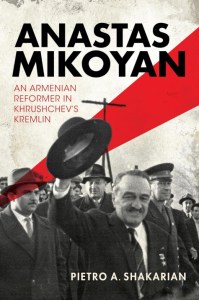
Book cover for "Anastas Mikoyan: An Armenian Reformer in Khrushchev's Kremlin"

Book cover for Anastas Mikoyan: An Armenian Reformer in Khrushchev’s Kremlin

The Reconsidering Russia blog and podcast have been on “hiatus” for a period of about five years. The last major activity was my interview with the late great historian Stephen F. Cohen, my friend and mentor best known for his biography of Nikolai Bukharin. Since then, a lot has happened. I completed my PhD at Ohio State, moved on to a lectureship in Yerevan, and then a postdoctoral fellowship in St. Petersburg. Over that time, the world witnessed major upheavals, including the still-ongoing war in Ukraine. All the while, I was steadily and meticulously preparing my monograph on Anastas Mikoyan and his reforms in the sphere of Soviet nationality policy during the period of Nikita Khrushchev’s Thaw.

Now, I am happy to report that my Mikoyan research journey is finally nearing completion. My forthcoming book Anastas Mikoyan: An Armenian Reformer in Khrushchev’s Kremlin will be published by Indiana University Press in August 2025, and it is already listed on Amazon.com. The study is largely based on never-before-seen materials from the Russian and Armenian archives, as well as memoirs in the Russian and Armenian languages. Here is Indiana’s official description of the book:

Veteran Soviet statesman and longtime Politburo member Anastas Ivanovich Mikoyan is perhaps best remembered in both the West and the post-Soviet space as a master political survivor who weathered every Soviet leader from Lenin to Brezhnev. Less well known is the pivotal role that Mikoyan played in dismantling and rejecting the Stalinist legacy and guiding Khrushchev’s nationality policy toward greater decentralization and cultural expression for nationalities.

Based on new discoveries from the Russian and Armenian archives, Anastas Mikoyan is the first major biographical study in English of a key figure in Soviet politics. The book focuses on the Armenian statesman’s role as a reformer during the Thaw of 1953–1964, when Stalin’s death and Khrushchev’s ascension opened the door to greater pluralism and democratization in the Soviet Union. Mikoyan had been a loyal Stalinist, but his background as a native Armenian guided his Thaw-era reform initiatives on nationality policy and de-Stalinization. The statesman advocated a dynamic approach to governance, rejecting national nihilism and embracing a multitude of ethnicities under the aegis of “socialist democracy,” using Armenia as his exemplar. While the Soviet government adopted most of Mikoyan’s recommendations, Khrushchev’s ouster in 1964 ended the prospects for political change and led to Mikoyan’s own resignation the following year. Nevertheless, Mikoyan remained a prominent public figure until his death in 1978.

Following a storied statesman through his personal and professional connections within and beyond the Soviet state, Anastas Mikoyan offers important insights into nation-building, the politics of difference, and the lingering possibilities of political reform in the USSR.

Here are some preliminary reviews:

“Shakarian’s study reflects a significant amount of scientific work. Especially noteworthy is his ability to analyze historical events and personae in a context that was constantly changing throughout the lifetime of Anastas Mikoyan. His work with sources is particularly impressive.”
~Mark Grigorian, author of Yerevan: Biography of a City

“This splendid piece of research and writing deals with important issues that have not been adequately explored before in historical scholarship. The archival revelations are stunning, and Shakarian brings new light to obscured topics, showing the inner workings of the Soviet system under Stalin and Khrushchev. Well-organized, readable, and never verbose, it is a much-needed and original contribution to the field of Soviet studies.”
~Ronald Grigor Suny, author of Stalin: Passage to Revolution

“Pietro Shakarian’s remarkable, comprehensive examination of one of the great, emblematic figures of the Soviet past stands as an invaluable contribution to the study of the role of the individual in history.”
~Edward Nalbandian, former foreign minister of Armenia

“This book is unquestionably an important contribution to scholarship on Soviet policymaking and nationality policy. Mikoyan has until now been an unjustly neglected figure in Soviet policymaking. By focusing on his personal networks and groundbreaking initiatives in the field of de-Stalinization, Shakarian has made an important and invaluable contribution to greater understanding not only of the Khrushchev period, but of Soviet history as a whole.”
~Alex Marshall, author of The Caucasus Under Soviet Rule

“Shakarian’s painstaking research produces new and comprehensive insights into Mikoyan’s deft and consequential role in the reforms that came to define Nikita Khrushchev’s post-Stalin Thaw.”
~Edward P. Djerejian, former US Ambassador

“Anastas Mikoyan stands as a central yet understudied figure in Soviet politics. A faithful member of Stalin’s Politburo, Mikoyan ultimately rejected Stalinism in favor of political liberalization under Khrushchev. In this outstanding biographical study, Pietro Shakarian employs pathbreaking archival research to uncover Mikoyan’s leading role in Khrushchev’s reforms. He demonstrates that Mikoyan drew on his Armenian heritage to reorient Soviet nationality policy during de-Stalinization. This book will be essential reading for scholars of Soviet nationality policy, Khrushchev’s Thaw, and the history of the USSR more generally.”
~David L. Hoffmann, author of The Stalinist Era

Finally, here is a rare documentary (in Armenian) of Mikoyan’s visit to Armenia in March 1962, courtesy of the National Archives of Armenia in Yerevan:
On hiatus

Several followers of this blog have inquired in recent months about future episodes of the Reconsidering Russia podcast. Unfortunately, due to an exceptionally high work load this semester at Ohio State and an upcoming research trip in Yerevan this summer, I will be taking an extensive hiatus from my podcast and blog until August 2018. Upon my return, I promise more insightful interviews on Russia and Eurasia. Until then, please stay tuned! До свидания!

Reconsidering Russia Podcast: An Interview with Alexander Rabinowitch

You say you want a revolution? The fourteenth installment of the Reconsidering Russia podcast series features Dr. Alexander Rabinowitch, Professor Emeritus of Russian History at Indiana University in Bloomington.

Dr. Rabinowitch is best known for his three-part book series chronicling the history of the October Revolution, particularly his classic work The Bolsheviks Come to Power: The Revolution of 1917 in Petrograd. He is currently writing a fourth volume entitled The Bolsheviks Survive: Government and Crises in Civil War Petrograd, including new research from previously little-used Petersburg historical archives.

This interview includes discussions with Dr. Rabinowitch on the history and historiography of the Russian Revolution, the forthcoming centenary, his Russian émigré family background, the role of the Russian émigrés in the formation of Russian Studies in the US. and his meetings with Aleksandr Kerensky, Vladimir Nabokov, Irakli Tsereteli, and Boris Nicolaevsky.

L’affaire Stephen F. Cohen – and Academic Dissent and Division on Ukraine

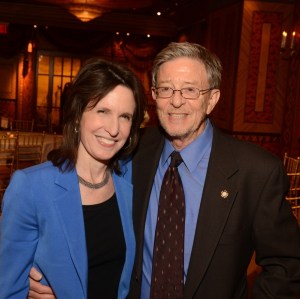
Stephen F. Cohen and Katrina vanden Heuvel (New York Historical Society)

Stephen F. Cohen and Katrina vanden Heuvel (New York Historical Society)

In recent weeks, renowned veteran Russia scholar, Professor Stephen F. Cohen, and his wife, Katrina vanden Heuvel, have been at the center of a controversy involving the Association of Slavic, Eastern European, and Eurasian Studies (ASEEES).

Much has already been written about this matter. For some background, see the article published in The New York Times on 28 January here and a listing of articles related to the situation, compiled by Sean Guillory, here.

However, within the context of this controversy, I would like to focus on one specific issue, i.e. that of Ukrainian academics, their reaction to Cohen’s work, and their suspected role in the ASEEES affair.

It is true that Cohen is not a specialist on Ukraine, though he does have some background on the country.  Overall, though, within Russian and Soviet studies, his primary focus has been, and continues to be, Russia itself rather than the other ex-Soviet republics.

Nevertheless, some Ukrainian academics in North America have used this perceived “weakness” as a means of discrediting Cohen’s views on Ukraine. One observer cited two Ukrainian-American scholars in this regard, Alexander Motyl and Serhii Plokhii, both of whom are known for their more nationalistic views. The observer alleges that such “aggrieved” Ukrainian-American academics have likely been at the forefront of the ASEEES’ considerations regarding Cohen. This may be correct, but it is important to clarify some significant aspects of this issue.

The narrative of Cohen being a Russianist who is “disconnected” from Ukrainian affairs and the post-Soviet republics is exceedingly problematic and over-simplistic. In fact, to criticize Cohen on his views on Ukraine simply on the basis that he does not specialize on the country is misleading and unfair.

Knowing Cohen personally, I can say that during this entire crisis, he has carefully and scrupulously consulted Ukrainian sources and made contact with specialists on the post-Soviet republics for his writings.  As someone who studies the former Soviet republics and the history of the Soviet nationalities policy with a tangential interest in Ukraine, I can confirm that what he has written on domestic developments in Ukraine is indeed factually sound.

Volodymyr Ishchenko

Volodymyr Ishchenko, lecturer of Sociology in the National University of Kyiv-Mohyla Academy

Further, the narrative of the “disconnected” Cohen also excludes dissenting views on the dominant narrative within Ukrainian studies. In fact, at least two Ukrainian academics, Ivan Katchanovski of the University of Ottawa and Volodymyr Ishchenko of the National University of Kyiv-Mohyla Academy, would agree with many of Cohen’s viewpoints on Ukraine’s domestic politics.

Indeed, while many Ukrainian academics have hailed the Maidan as a “liberationist” movement, the more skeptical Ishchenko has instead characterized it as a “pro-neoliberal [and] pro-nationalist” movement led by elites who do not necessarily represent the interests of the people.  Both Katchanovski and Ishchenko, like Cohen, have also been highly critical of the presence of the far-right in the Maidan Revolution.

They are not alone. There are other Ukrainian academics who have dissented from the prevailing narrative as well. In their search for an objective reality of events, they often contradict nationalist viewpoints which have found a warm reception among influential anti-Russian hawks and members of the war party in the US political establishment. Indeed, the works of Motyl and the Canada-based, OUN-affiliated Taras Kuzio are prominently featured in Foreign Affairs, the main publication of the US foreign policy establishment. By contrast, dissenters, like Katchanovski and Ishchenko, have not received such privilege, despite the more objective and factual nature of their research.

Given their views, dissenting Ukrainian academics have often found themselves in difficult positions. Not only do they face difficulties with their more nationalistic and ideological colleagues in Ukrainian Studies in North America and Europe. They also face repercussions in post-Maidan Ukraine as well.

Ivan Katchanovski

Ivan Katchanovski, professor of Political Science at the University of Ottawa

For instance, the over 100-year-old Czech-built family home of Ivan Katchanovski in Lutsk, the center of historic Volhynia in northwestern Ukraine, has been unlawfully appropriated by the Kiev government. The beleaguered professor believes that his research on Ukraine’s far-right and on the Odessa and Maidan Snipers’ massacres was most likely the reason for this action. The aim, he believes, is to prevent and intimidate him from conducting further research on these subjects in Ukraine. His thorough investigation into the Maidan Snipers’ massacre is especially significant. It found that the snipers who shot and killed both protestors and police on the Maidan were most likely far-right activists. This inconvenient truth contradicts the official Kiev line which blames the massacre on former President Yanukovych.  On 11 February, a report by the BBC World Service seemed to corroborate Katchanovski’s investigation.

Katchanovski suspects direct involvement from officials in Kiev in the seizure of his property due to the fact that the original decision came from higher-ups.  Further, according to Katchanovski, Mykola Sorokopud, the head of the lawyers’ association of the Volyn Oblast, was directly involved in falsifying evidence against him in order to confiscate his property. Sorokopud is affiliated with the far-right group Right Sector (Praviy Sektor) as well as Ihor Palytsia, the current governor of the Odessa Oblast. Another Lutsk native, Playtsia is also connected with Right Sector. He runs the foundation “New Lutsk”, headed by Sorokopud’s wife, that finances members of Right Sector fighting in the Donbas in the neo-Nazi Azov Battalion.

As these facts demonstrate, the ASEEES-Cohen affair is not strictly about issues relating to free speech, censorship, and much-needed funding for a much-needed but neglected discipline. Ironically, this debate is also indicative of how the Ukraine crisis has divided the Slavic, Russian, Ukrainian, and Eurasian academic communities, much like in Ukraine itself. These divisions exist on multiple levels, whether they are between those willing or unwilling to take into account Moscow’s point of view, or between those who are pro-Kiev or anti-Kiev.

Indeed, in their official correspondences, the ASEEES has expressed concern regarding “splits within the organization.” One hopes that these “splits” are not so profound as to affect the objective judgment of the ASEEES, an organization that professes to encourage discussion and debate among its members.  Unfortunately, this seems to be the case.  Evidently, the crisis in Ukraine has cast a long shadow over a respected academic association that should know better.

Full disclosure: I am a proud member of the ASEEES and a MA graduate student at the University of Michigan, Ann Arbor, focusing on the history of the Caucasus (especially Armenia and Georgia) in the Soviet era. My academic advisor is Ronald Grigor Suny, one of the signatories of the ASEEES letter in defense of Cohen and of the reply to the ASEEES. Like Cohen, he is a fellow scholar in the revisionist school of Soviet and Russian historiography.